

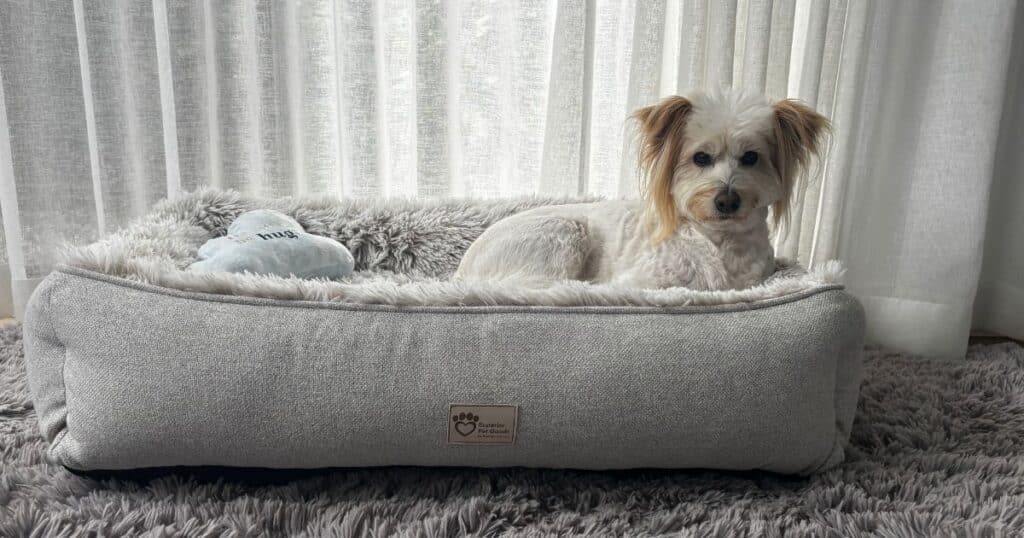
Choosing a dog bed involves much more than selecting a colour or style that suits your home. Your dog’s size, age, health, sleeping position and preferred resting location all influence which bed will keep them comfortable and properly supported.
Dogs spend a significant portion of each day sleeping or resting, so a quality bed can make a real difference to their comfort, mobility and overall wellbeing. This is particularly important for senior dogs, large and heavy breeds, and dogs living with arthritis or other joint conditions.
Before buying a dog bed, take some time to watch how your dog naturally sleeps. Do they curl into a tight ball, stretch out across the floor or rest their head on a cushion? Their answer may be quite different from the bed you would choose based on appearance alone.
The best dog bed is one that suits your individual dog rather than following a one-size-fits-all approach. Consider:
It may also be worth providing more than one bed if your dog rests in different parts of the home or moves between indoor and sheltered outdoor areas.
Your dog’s sleeping position is one of the best indicators of the bed shape they may prefer.
Beds for dogs that stretch out
Dogs that enjoy stretching out need a bed long and wide enough to support their entire body. No part of your dog should be consistently hanging over the edge.
A flat orthopaedic mat can work well for long-limbed dogs, dogs that change positions frequently and those with reduced mobility who may find it difficult to step over raised sides.
The Superior Pet Goods Ortho Dog Mat Ripstop provides a supportive, low-profile surface with a water-repellent and tear-resistant ripstop cover. This can be a practical option for larger dogs and those that scratch or nest before settling.
Use Promo Code Pooches15 at checkout for 15% off until end November 2026 for all of the Superior Pet Goods mentioned in this article, or any others, on their website.
Beds for dogs that curl up
Some dogs naturally curl themselves into a ball and enjoy feeling enclosed. A round bed with a raised edge can give these dogs a comfortable place to nest and may help them feel warm and secure.
The Hugzzz Ortho Curl Up Cloud is an Australian-made round bed filled with 100% Australian-made memory foam flakes that mould to a dog’s body while supporting their neck, spine and joints.
The raised, cushioned shape creates a cosy “cuddle” feeling, while the memory foam provides pressure relief that can be especially helpful for senior dogs that still prefer a curl-up style of bed.
Beds for dogs that like a headrest
If your dog regularly rests their chin on cushions, furniture or the edge of their current bed, consider a sofa-style or bolstered dog bed.
The raised sides give dogs somewhere to rest their head while the main sleeping area supports the rest of their body. They may also help dogs that like the security of sleeping against an edge.
An orthopaedic pet sofa can be a good choice for long-limbed dogs that enjoy stretching out with their head elevated. A generously sized sofa bed may also suit bonded dogs that regularly sleep together, provided there is enough room for both dogs to move away or change position when they choose.
Beds for dogs that like to feel tucked in
A walled bed can suit dogs that enjoy leaning against something or feeling surrounded as they sleep.
The indoor Ortho Dog Lounger, which combines an orthopaedic foam base with padded sides and a soft covering, has a supportive base that helps protect the joints, while the walls provide a comfortable backrest or chin rest.
For dogs needing additional contouring and cushioning, the Superior Pet Goods Orthopaedic Memory Rest has memory foam flakes throughout the sleeping area and raised oval bolster. The foam moulds to the dog’s shape to help distribute pressure while providing support around the neck, spine and joints.
This makes it a comfortable option for dogs large, older dogs, as well as other senior dogs that enjoy the security of raised sides.
When choosing a dog bed size, do not rely solely on descriptions such as small, medium or large. Bed measurements can differ between manufacturers.
Measure your dog from the tip of their nose to the base of their tail while they are lying in their usual sleeping position. If they stretch out, include their fully extended legs. You should then allow some additional room so they can turn around and change position comfortably.
Also check the recommended weight range and internal sleeping dimensions. This is especially important with walled beds, because the outside measurement includes the bolsters and may make the usable sleeping area smaller than expected.
If two dogs regularly sleep together, the bed should comfortably support their combined weight and allow both dogs enough space. They should still have access to separate resting places so neither dog is forced to share.
Joint support becomes increasingly important as dogs age. However, an orthopaedic dog bed is not only for senior dogs. Large and heavy breeds, active dogs, recovering dogs and those with joint or spinal conditions may also benefit from additional support.
A dog bed for arthritis should:
A bed that feels exceptionally soft to us is not necessarily the most supportive choice. If it sinks too deeply or moves beneath the dog, an older dog may struggle to stand up.
A low-profile orthopaedic mat can be easier for dogs with limited mobility. However, some senior dogs still prefer a walled or round bed. In this case, look for a low entry point and make sure your dog can step in and out without stumbling.
If your dog appears stiff after resting, has difficulty getting up or is reluctant to use stairs, jump or exercise, arrange a veterinary assessment. A supportive dog bed can improve comfort, but it is not a replacement for appropriate arthritis diagnosis, pain relief and management.
An outdoor dog bed needs to cope with different conditions from an indoor bed. It should be durable, breathable, easy to clean and protected from moisture.
A raised bed can help keep your dog away from cold flooring, damp ground and hot surfaces. The open-weave fabric used in many raised beds also encourages airflow underneath the dog during warmer weather.
The Superior Pet Goods Original Flea-Free Dog Bed uses a breathable cover and galvanised steel frame designed for Australian conditions. Adding a compatible mat can provide extra comfort in cooler weather, while removing it during summer allows greater airflow.
The mesh construction also gives fleas fewer suitable places to hide than thick bedding placed directly on the ground. However, no bed replaces regular parasite prevention and environmental flea control.
Another option is the Ortho Dog Lounger Ripstop. It combines a thick orthopaedic foam base with a breathable, water-repellent ripstop cover and padded sides.
Water-resistant does not mean waterproof, however. Any outdoor dog bed should be kept under suitable cover and protected from rain and prolonged moisture.
Most importantly, dogs spending time outside must always have access to shade, shelter, fresh water and protection from the sun, rain, wind and cold at every time of the day and night. An outdoor bed should provide another comfortable resting place—not replace access to a safe and temperature-controlled environment.
Puppies may chew, scratch or toilet on their bedding, so practicality is important during the early months.
Choose a puppy bed that:
Redirect inappropriate chewing towards a safe, rewarding chew toy and supervise your puppy around bedding until you are confident they will not ingest the fabric or filling.
Puppies generally finish teething at around six to eight months, although chewing can continue beyond this age. Rather than buying an expensive lifelong bed immediately, you may prefer a practical starter bed until you understand your puppy’s sleeping habits and likely adult size.
Remember that even heavy-duty fabric is not indestructible. Remove any damaged bed if your puppy is pulling out or swallowing pieces, as ingested fabric or filling can cause a dangerous intestinal obstruction.
Dog beds collect hair, dirt, moisture, skin cells and allergens, so ease of cleaning should be a key part of choosing a dog bed .
Look for:
Superior Pet Goods uses Australian-made orthopaedic and memory foams across many of its beds. Selected foams are treated with Ultra-Fresh antimicrobial protection to help control mould, odours and bacterial growth.
The company also uses recycled PET fibre in selected bolsters and soft-filled components, helping to turn post-consumer plastic into practical bedding fill.
Always follow the care instructions for your particular bed. While many removable covers can be machine washed, foam inserts generally need to be spot-cleaned rather than placed in a washing machine.
While you may have preferences about how a bed looks in your home, your dog will tell you whether it is comfortable.
Once the bed is in place, observe whether your dog:
Give your dog time to become familiar with a new bed. You can encourage them to investigate it by placing it in a familiar resting area and adding a blanket carrying their scent. Reward calm interaction, but never force your dog onto the bed.
Ultimately, choosing a dog bed comes down to balancing comfort, support, sleeping style and practicality. Superior Pet Goods is an Australian family-run manufacturer offering dog beds in a wide range of shapes, sizes, materials and colours, making it easier to find an option suited to your individual dog.
You can explore the complete range at Superior Pet Goods.
Use Promo Code Pooches15 at checkout for 15% off until end November 2026 for all of the Superior Pet Goods mentioned in this article, or any others, on their website.
What type of dog bed is best?
The best dog bed depends on your dog’s size, sleeping position, age, mobility and individual preferences. Stretchers often prefer a flat mat, curlers may enjoy a round bed, and dogs that rest their head on cushions may prefer raised sides or bolsters.
How do I know what size dog bed to buy?
Measure your dog in their natural sleeping position and allow extra room for them to turn, stretch and change position. Check the internal sleeping dimensions as well as the total external size, particularly when buying a walled bed.
Are orthopaedic dog beds worth it?
A well-made orthopaedic dog bed can provide better support and pressure distribution than thin or unsupportive bedding. It may be particularly beneficial for senior dogs, large breeds, active dogs and dogs with arthritis, injuries or mobility problems.
Is memory foam good for dogs with arthritis?
Quality memory foam can contour around a dog’s body and help relieve pressure on sore joints. It must still be sufficiently supportive for the dog’s weight and easy for them to get on and off. A bed should form part of a broader veterinary arthritis-management plan.
Do dogs prefer round or rectangular beds?
Dogs that curl up often enjoy round beds with raised edges, while dogs that stretch out may prefer rectangular mats or sofa-style beds. Watching your dog’s natural sleeping position is the best way to identify their likely preference.
Should an outdoor dog bed be raised?
A raised outdoor dog bed can improve airflow and keep your dog away from damp, cold or hot surfaces. It must still be placed in a sheltered location protected from rain, direct sun, wind and temperature extremes.
How many beds should a dog have?
There is no fixed number, but many dogs benefit from having comfortable resting places in the areas where the family spends time. Senior dogs may particularly benefit from having supportive beds in several locations so they do not need to move far or lie on hard floors.
How often should I replace my dog’s bed?
Replace the bed when it no longer supports your dog properly, has become permanently flattened, cannot be cleaned effectively or has damaged fabric, seams or zips. Some quality beds offer replacement covers or components, allowing the bed to be refreshed without replacing the entire product.
About the Author: Lara Shannon is a certified dog behaviourist and trainer, pet food nutrition specialist, Executive Producer and Host of Pooches at Play on Channel 10 and editor of Poochesatplay.com. Lara also runs her own dog training business in Melbourne’s Bayside area and is the Author of World of Dogs and Eat, Play, Love Your Dog
Dog theft: How to keep your dog safe

Benefits of Slow Cooked Dog Food
Environmental enrichment for dogs

Get your paws on Lara Shannon’s best selling books ‘Eat, Play, Love (your dog) and World of Dogs.
Available in Australia, USA, UK and Canada.