
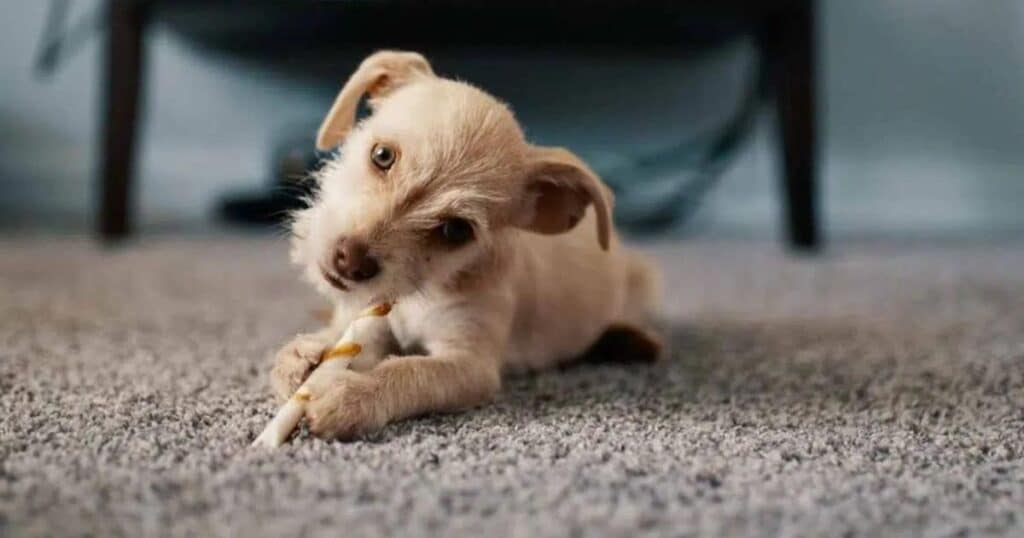
Puppies are one big bundle of fun and energy, with their happy smiles and wagging tails -but they also like to use their mouths a lot! Puppy biting and mouthing is normal, but knowing how to redirect it away from your hands, clothing and belongings can be challenging.
Puppies explore the world through their mouths, particularly during play and teething. Although we need to allow them to fulfill this natural need, we must also teach them what they can and cannot chew.
Unfortunately, owners can unintentionally reinforce unwanted behaviour by treating puppy biting as a game. This includes encouraging rough play or allowing a puppy to nibble hands, bite hair and jump up on people.
It might seem harmless when your puppy weighs only a few kilograms, but it becomes much less acceptable when they are an adult with a full set of teeth and a stronger jaw.
Suddenly punishing a dog for behaviour that was previously encouraged or tolerated can be confusing. It sets your puppy up to fail and is why it is important to address potential dog behaviour problems from the beginning.
Puppy biting and mouthing is one of the most common concerns among new puppy owners, so let’s look at why puppies do it and how you can redirect it appropriately.
Puppies explore their environment with their mouths. They also use their mouths during play and when teething, so biting and chewing are normal parts of puppy development.
This doesn’t mean you should allow your puppy to bite people. Instead, give them safe and appropriate outlets for their need to chew while consistently teaching them that human skin and clothing are off limits.
Puppies may also bite more when they are:
Recognising what is driving the behaviour can help you choose the best response.
Bite inhibition refers to a puppy learning to control the force of their mouth.
One way puppies begin to develop bite inhibition is through interaction with their littermates and other suitable puppies. If one puppy bites another too hard, the other puppy will usually stop playing or move away. The biting puppy learns that rough biting makes the fun end.
Carefully supervised play with appropriately matched puppies can support this learning. A reputable puppy school can provide opportunities for safe socialisation and guided play, while also helping you learn how to manage puppy biting at home.
Encourage your puppy to chew safe, durable and appropriately sized toys that cannot be swallowed.
Interactive treat-dispensing toys such as the Rogz Tumbler, Rogz Grinz Ball or KONG toys can help keep puppies occupied. Rotating two or three toys each day can also help maintain their interest.
Puppies are often attracted to shoes, socks and children’s toys because these items smell like members of the household. Keep tempting belongings out of reach and offer appropriate chew toys instead.
If you want to give your puppy a raw bone or edible chew, speak to your veterinarian about the safest type and size for your individual puppy. Always supervise chewing and never give dogs cooked bones.
Avoid allowing your puppy to bite, chew or mouth your hands, even if it seems playful, as your reaction may reinforce the puppy biting behaviour.
Rough play can be particularly confusing. Children may get down on the floor and allow a puppy to jump on them, grab their clothes or bite their hair. This can encourage the puppy to repeat the behaviour with them and other people.
Instead, encourage interactive play using a ball, suitable tug toy or another toy that creates some distance between the puppy’s teeth and human hands.
To read more about safe interactions between children and dogs, click HERE.
If your puppy bites you during play, calmly stop interacting. Remove your hands from their reach, fold your arms or walk away without shouting, pushing them or turning it into a game.
Some people recommend making a high-pitched yelping sound, similar to another puppy. However, this can make certain puppies even more excited and encourage further biting. Quietly ending the interaction is often a clearer response.
Once your puppy has settled, calmly resume your interaction. This helps them learn that biting makes attention and play stop, while calm behaviour allows the fun and companionship to return.
Try to ensure everyone in the household responds consistently. Puppy biting can take longer to improve if one person discourages it while another allows or encourages it.
If you notice your puppy preparing to mouth or bite you, gently offer them a suitable toy before they make contact.
Timing is important. Ideally, the toy should reach their mouth before they bite your hand or body. If your puppy bites you and immediately receives a toy, they could learn that biting is what makes the toy appear.
Keep suitable toys nearby so you can redirect your puppy quickly. You can also ask for an alternative behaviour, such as “sit,” and then reward it. This teaches your puppy what you would like them to do instead and encourages the desired behaviour through positive reinforcement training.
Your puppy is still learning how to interact with people and the world around them. Avoid shouting, hitting, slapping their muzzle or using your hands to physically correct them.
Physical punishment can make a puppy frightened of hands. In some cases, it can also increase excitement, defensive behaviour or aggression, making the biting worse.
Instead, calmly end the interaction, remove access to whatever they are biting and redirect them towards an appropriate behaviour or chew item.
Prevention is an important part of managing puppy biting and chewing. Put away shoes, socks, children’s toys and other tempting belongings rather than expecting your puppy to make the right choice every time.
If your puppy is chewing furniture or other household items, use a commercially produced, pet-safe taste deterrent according to the manufacturer’s directions. Also make sure your puppy has enough appropriate chew toys, enrichment, exercise and rest.
Remember that puppies often become particularly bitey when they are overtired. If your puppy has been active for some time and is becoming increasingly difficult to redirect, they may need a quiet toilet break followed by a rest.
Digging is another common puppy behaviour. A designated sandpit can provide an appropriate digging outlet and help prevent boredom. You can hide toys or treats in the sand to encourage your puppy to dig in that area.
Crate training is also very useful for providing your puppy with their own space calming space to settle in. Learn about the benefits and how to crate train your puppy HERE.
Set your puppy up for success
Dogs don’t simply grow out of every problem behaviour; without guidance, they can grow into it. Start teaching your puppy the behaviours you will expect from them as an adult.
Be consistent, provide appropriate outlets for chewing and reward calm, desirable behaviour. Puppy school is a great place to begin. For help choosing the right one, read our guide to finding a good puppy school.
If your puppy’s biting is intense, difficult to interrupt or accompanied by fear, guarding, stiff body language or growling, seek advice from a qualified positive-reinforcement trainer or veterinary behaviour professional.
For tips on how to train a puppy click HERE.
Is puppy biting normal?
Yes. Puppies naturally explore and play with their mouths, and biting can increase while they are teething. However, they still need consistent guidance so they learn that people, clothing and household belongings are not appropriate things to bite.
At what age do puppies stop biting?
Puppy biting generally reduces as teething finishes and a puppy develops better self-control, but it won’t necessarily disappear without training. Consistent redirection, appropriate chew outlets and rewarding calm behaviour will help establish good habits.
What should I do when my puppy bites me?
Calmly stop the interaction and remove your hands from their reach. Avoid shouting, pushing or hitting. Once your puppy settles, resume the interaction or ask for a simple alternative behaviour that you can reward.
Why does my puppy bite more at night?
Many puppies become increasingly mouthy when they are overtired or overstimulated. If biting becomes worse later in the day, your puppy may need a quiet toilet break and some uninterrupted rest.
Should I yelp when my puppy bites?
Yelping may interrupt some puppies, but it can excite others and make the biting worse. Calmly ending the interaction is often clearer and less stimulating.
How can I redirect puppy biting?
Keep suitable toys close by and offer one when you notice your puppy preparing to mouth you. Try to redirect them before their teeth make contact, then praise or reward them for chewing the toy.
About the Author: Lara Shannon is a certified dog behaviourist and trainer, pet food nutrition specialist, Executive Producer and Host of Pooches at Play on Channel 10 and editor of Poochesatplay.com. Lara also runs her own dog training business in Melbourne’s Bayside area and is the author of World of Dogs and Eat, Play, Love Your Dog.
Calm an Anxious Dog at the Vet or Groomer


Environmental enrichment for dogs
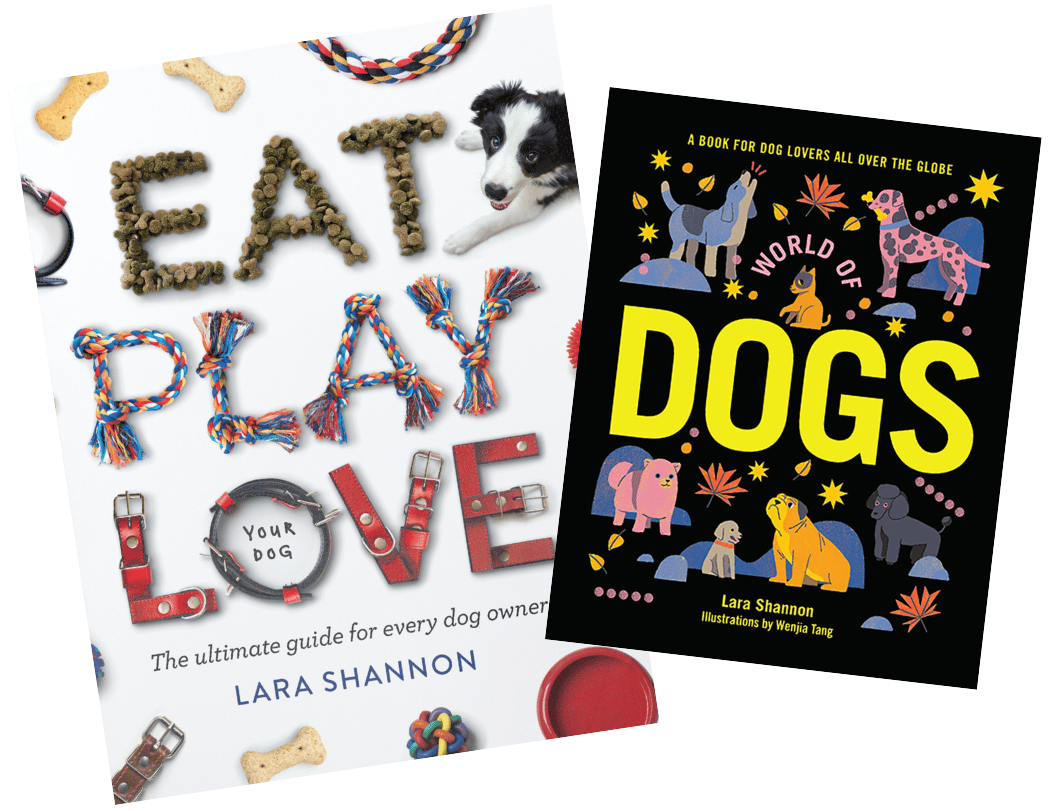
Get your paws on Lara Shannon’s best selling books ‘Eat, Play, Love (your dog) and World of Dogs.
Available in Australia, USA, UK and Canada.