

Ear mites in dogs are tiny parasites that live primarily inside the ear canal and on the surrounding skin. They can cause intense itching, head shaking, inflammation and a characteristic dark-brown discharge that resembles coffee grounds.
Ear mites are also one of several types of mites that can affect dogs. Sarcoptes mites cause highly contagious sarcoptic mange, while Demodex mites live naturally in small numbers on most dogs but can cause skin disease if they multiply excessively.
Because the symptoms of mites can resemble allergies, ear infections and other skin conditions, it is important to see your veterinarian for an accurate diagnosis and the right treatment.
Ear mites are microscopic external parasites. The species most commonly affecting dogs is called Otodectes cynotis.
These mites live in the ear canal and feed on wax and debris. Their movement and feeding activity can cause significant irritation, even though the mites themselves are usually too small to see with the naked eye.
Ear mites can affect dogs of any age, but they are particularly common in puppies and animals that have been in close contact with other infested pets.
They can spread between dogs and cats, so if one animal in the household is diagnosed with ear mites, your veterinarian may recommend checking or treating the other pets as well.
You are unlikely to see the ear mites themselves without magnification. Instead, you will usually notice the irritation and debris they cause.
A dark-brown or black, crumbly discharge that resembles coffee grounds is one of the most recognisable signs of ear mites in dogs. This debris can contain earwax, blood and material produced by the mites.
However, you cannot diagnose ear mites from the discharge alone. Bacterial and yeast infections can produce similar signs and may also develop as secondary infections alongside the mites.
Ear mites can be extremely irritating and uncomfortable.
Signs to watch for include:
Severe scratching and head shaking can damage the delicate skin around the ears. In some cases, repeated head shaking can also contribute to an aural haematoma, where blood collects inside the ear flap.
Dogs may occasionally scratch an ear or shake their head without there being a serious problem. However, new, frequent or persistent scratching and head shaking should not be ignored.
A useful rule is that if you have started noticing the behaviour when you didn’t previously, or your dog repeatedly returns to the same ear, something may be wrong.
Arrange a veterinary appointment if the scratching continues or you notice:
Seek prompt veterinary advice if your dog develops severe pain, loss of balance, a persistent head tilt or sudden difficulty walking.
Ear mites are highly contagious and generally spread through close contact with an infested animal.
Dogs can acquire them from:
Ear mites spend most of their life cycle on the animal. However, they may survive in the environment for a limited time, which is why your veterinarian may recommend washing bedding and treating other pets in the home.
Your veterinarian will examine your dog’s ears using an otoscope and may take a swab or sample of the ear debris.
The sample can be examined under a microscope to look for mites and their eggs. Your vet may also check for bacterial or yeast infections, which can make the itching, inflammation and odour worse.
It is important to obtain an accurate diagnosis because other conditions can cause similar symptoms, including:
Treating the wrong condition can delay relief and potentially make the irritation worse.
Your veterinarian will recommend an effective parasite treatment to kill the ear mites. Treatment may be oral, topical or applied directly to the ears, depending on the product and your dog’s individual needs.
Your dog’s ears may also need to be cleaned to remove accumulated wax and debris. However, do not insert cleaning products into a painful ear without veterinary advice. If the eardrum is damaged, some ear-cleaning products and medications may cause further problems.
Treatment for ear mites in dogs may include:
Always complete the full course recommended by your veterinarian, even if your dog’s symptoms improve quickly.
NexGard SPECTRA is registered in Australia to treat and control ear mite infestations caused by Otodectes cynotis. It is also registered to treat and control sarcoptic mange caused by Sarcoptes scabiei and demodectic mange caused by Demodex species.
In addition to mites, NexGard SPECTRA protects dogs against fleas, ticks, heartworm and several important intestinal worms, helping to simplify their parasite-protection routine.
It can be used in puppies from eight weeks of age, provided they weigh at least 1.35kg. Always select the correct product for your dog’s current weight and follow the label and your veterinarian’s advice.
If your dog is already scratching or has discharge from an ear, see your vet rather than assuming ear mites are responsible. Your dog may have a different ear condition or a secondary infection requiring additional treatment.
Keeping your dog up to date with a parasite treatment that covers ear mites is one of the easiest ways to help prevent an infestation.
Not every flea or tick product also treats ear mites, so always check the label or ask your veterinarian whether your chosen product provides the right protection.
You can also help reduce the risk by:
Do not routinely overclean healthy ears, as this can cause irritation and disrupt the natural environment inside the ear. Ask your veterinarian how often your individual dog’s ears should be cleaned and which product is suitable.
Ear mites are one of three key mite types commonly affecting dogs. The others are Demodex mites and Sarcoptes mites.
Mites are closely related to ticks, although they are much smaller. Most species can only be identified with a microscope.
The symptoms and method of transmission vary depending on the mite involved.
Most dogs naturally carry small numbers of Demodex mites in their hair follicles. Puppies generally acquire these mites from their mother through close contact during the first few days of life.
In healthy dogs, the immune system keeps the mite population under control and they cause no problems. However, if the mites multiply excessively, they can cause demodicosis, also known as demodectic mange.
What causes demodectic mange in dogs?
Demodectic mange is most common in puppies and young dogs whose immune systems cannot effectively control the mites.
It can also develop in adult or senior dogs with an underlying illness or compromised immune system. If an adult dog suddenly develops demodicosis, your veterinarian may recommend further testing to determine whether another health condition is affecting their immune response.
Unlike sarcoptic mange, the most common form of canine demodicosis is not generally considered contagious between adult dogs or from dogs to people.
Signs of demodectic mange
Demodectic mange may affect one or two small areas or become generalised across larger parts of the body.
Signs can include:
Localised demodicosis commonly affects the face, especially around the eyes and mouth, as well as the front legs and paws.
How are Demodex mites diagnosed and treated?
Demodex mites live deep within the hair follicles, so diagnosis commonly involves taking deep skin scrapings and examining them under a microscope.
Your veterinarian may also use hair plucks, adhesive tape samples or other diagnostic tests.
Localised demodicosis in a young dog may sometimes resolve as the immune system matures, but veterinary assessment is still important.
Generalised demodicosis requires treatment and ongoing monitoring. Your vet may also prescribe antibiotics, medicated shampoos or other treatments if a secondary skin infection is present.
Sarcoptes mites and sarcoptic mange in dogs
Sarcoptes mites burrow into a dog’s skin and cause sarcoptic mange, sometimes called canine scabies.
Unlike Demodex, Sarcoptes mites are highly contagious and spread through direct contact with an infested animal. They can also temporarily affect people who have close contact with an infested dog, causing an itchy rash.
However, canine Sarcoptes mites generally cannot complete their full life cycle on human skin.
Sarcoptic mange usually causes much more intense itching than uncomplicated demodectic mange.
Signs can include:
The ears, elbows, chest, belly and lower legs are commonly affected, although the infestation can eventually spread across the body.
How is sarcoptic mange diagnosed?
Sarcoptes mites can be difficult to find, even when a dog has typical signs. Your vet may take several superficial skin scrapings, but a negative result does not always rule out sarcoptic mange.
Diagnosis may therefore be based on:
How is sarcoptic mange treated?
Sarcoptic mange requires an effective parasite treatment and may need multiple doses. Your veterinarian will advise how long treatment should continue and whether other animals in the household also need to be treated.
Treatment may also include medication to manage the itching and inflammation, along with antibiotics if a secondary bacterial infection has developed.
Bedding should be washed and frequently used resting areas cleaned. Your dog should avoid contact with other animals until your veterinarian advises that they are no longer contagious.
The symptoms provide some clues, but only your veterinarian can confirm the cause.
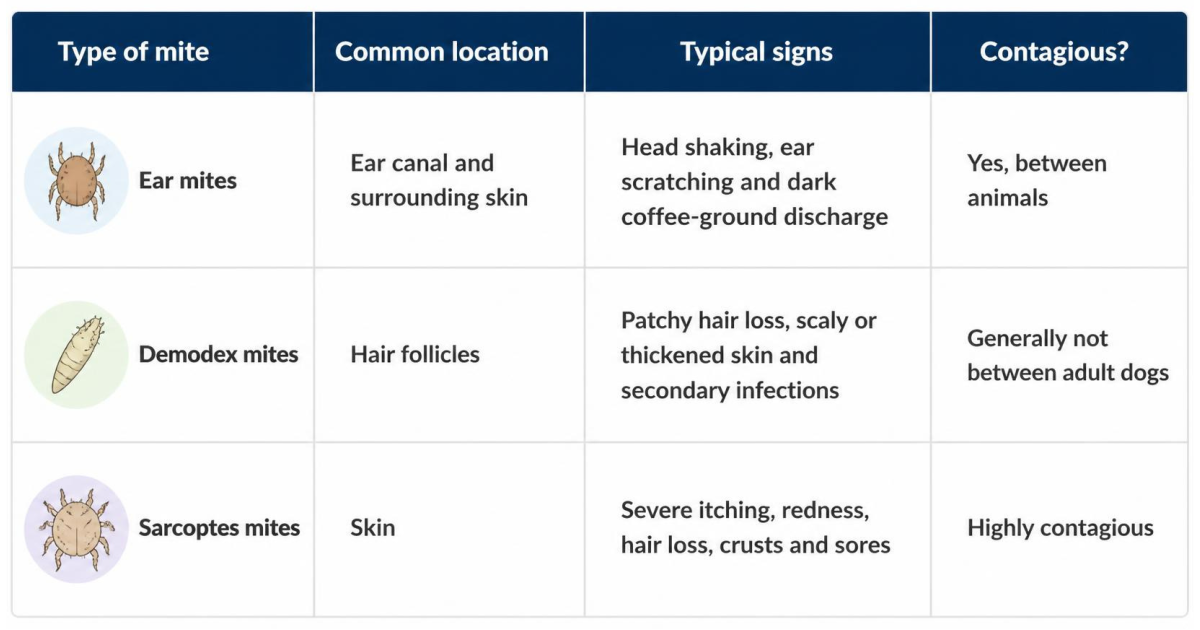
Allergies, fleas, bacterial infections, yeast infections and other skin conditions can cause similar symptoms. Avoid trying to diagnose mites from photographs or symptoms alone.
Treatment for mites on dogs depends on the species involved, the severity of the infestation and whether your dog has developed a secondary infection.
Your veterinarian may recommend:
Avoid home remedies, household insecticides or products intended for another animal. Some products that are safe for dogs can be highly toxic to cats.
Using an unsuitable product may also irritate already inflamed skin, damage the ear or delay an accurate diagnosis.
Keeping your dog up to date with broad parasite protection is an important part of preventing ear mites and managing the risk of other mite infestations.
Additional steps include:
Choose a parasite treatment that covers the mites relevant to Australian dogs, as not every flea or tick treatment also controls ear mites, Sarcoptes and Demodex.
Mites may be tiny, but the irritation they cause can have a significant impact on a dog’s comfort and wellbeing.
Persistent scratching can damage the skin and ears, leading to painful wounds and secondary bacterial or yeast infections. Severe itching can also affect a dog’s sleep, behaviour and quality of life.
The earlier the cause is identified, the sooner your dog can receive effective treatment and relief.
Can you see ear mites in dogs?
Ear mites are extremely small and are difficult to identify with the naked eye. Your veterinarian will usually confirm them by examining ear debris under a microscope.
What is the black or brown material in my dog’s ear?
Dark-brown or black discharge resembling coffee grounds is commonly associated with ear mites. However, yeast, bacteria and other ear conditions can cause similar discharge, so your dog should be examined by a veterinarian.
Can ear mites spread between dogs and cats?
Yes. Ear mites can spread through close contact between dogs and cats. If one pet is diagnosed, ask your veterinarian whether other animals in the household should also be examined or treated.
Can ear mites in dogs affect humans?
Ear mites do not generally establish infestations in people. Sarcoptes mites, however, can temporarily cause an itchy rash in humans who have had close contact with an infested dog.
Can a dog have ear mites in only one ear?
Ear mites can initially appear more obvious in one ear, but both ears should be examined because the mites can spread between them.
Can ear mites go away without treatment?
Ear mites are unlikely to resolve reliably without effective treatment. Delaying treatment can lead to ongoing discomfort, ear damage and secondary infections.
Can I treat my dog’s ear mites at home?
Your dog should first be examined by a veterinarian because bacterial infections, yeast, allergies and foreign bodies can produce similar symptoms. Home remedies may irritate the ear and may not kill the mites.
Does NexGard SPECTRA prevent ear mites?
Monthly use as directed treats and controls ear mite infestations. If your dog already has symptoms, see your veterinarian because they may also have inflammation or a secondary infection requiring additional treatment.
How long does it take to treat ear mites in dogs?
The time required depends on the product used and whether a secondary infection is present. Symptoms may begin improving quickly, but you should complete the full treatment recommended by your veterinarian.
Are Demodex mites contagious?
The most common Demodex mite affecting dogs is not generally contagious between adult dogs. Puppies usually acquire small numbers from their mother soon after birth, and most never develop demodectic mange.
What is the difference between Demodex and sarcoptic mange?
Demodectic mange occurs when normally present Demodex mites multiply because the dog’s immune system cannot adequately control them. It often causes hair loss and skin changes.
Sarcoptic mange is caused by contagious Sarcoptes mites and usually produces sudden, intense itching.
Can dogs still get mites while using flea treatment?
Yes. Not every flea treatment is registered to control mites. Check the product label or ask your veterinarian whether your dog’s parasite protection covers ear mites, Sarcoptes and Demodex.
To learn more about NexGard SPECTRA and how it can help protect your pet, visit their website.
About the Author: Dr Melissa Meehan is a highly experienced and respected veterinary surgeon with over 15 years experience. Dr Melissa obtained her Members in Small Animal Medicine through examination in 2008 and now runs her own veterinary ophthalmology service.