

The paralysis tick is one of Australia’s most dangerous parasites. A single tick can inject enough toxin to cause progressive paralysis, breathing difficulties and death in a dog or cat if treatment is not provided quickly.
Paralysis ticks are found along Australia’s eastern coastline, however, occasionally cases are reported outside of this region. Year-round prevention, daily physical tick searches and knowing the early signs of paralysis tick in dogs can help protect your pet.
If you find a tick or notice any possible symptoms, remove the tick immediately and contact your veterinarian – even if your dog or cat is receiving tick prevention.
The eastern paralysis tick, Ixodes holocyclus, is primarily found along the eastern coast of Australia, extending from northern Queensland through New South Wales and into eastern Victoria.
Paralysis ticks usually feed on native wildlife, including bandicoots, possums and koalas. However, they can also attach to dogs, cats, livestock and humans when the opportunity arises.
They favour humid environments with dense vegetation, including:
Ticks wait on vegetation for a suitable host to pass. When a dog brushes against the plant, the tick climbs onto their body, finds a place to attach and begins feeding.
Although paralysis tick numbers rise during particular seasons, cases can occur at any time of year—including during winter.
A 2023 study published in the International Journal for Parasitology found that the timing of tick paralysis cases varied according to latitude. Tick season generally began earlier in northern regions than in southern regions.
The researchers also identified two periods of increased tick paralysis cases in East Gippsland, Victoria—one during autumn and another during spring. The Queensland and New South Wales regions studied had one main season. However, cases were still recorded outside these peak periods. The study is available through PubMed.
This means pet parents should not assume their dog is safe simply because it is winter or the recognised peak tick season has passed.
As a paralysis tick feeds, it produces a potent neurotoxin in its saliva. This toxin affects the nervous system and interferes with the dog’s ability to control their muscles.
The resulting paralysis often begins in the hind legs before progressing through the body. It can eventually affect the muscles involved in swallowing and breathing.
Tick paralysis is a veterinary emergency. Even dogs that receive prompt, high-quality veterinary care may not survive severe toxicity, which makes prevention and early intervention critically important.
The early symptoms of a paralysis tick in dogs can be subtle and may initially resemble other illnesses. Signs generally become more severe as the toxin affects the nervous system.
Early signs of tick paralysis
Early warning signs can include:
Advanced signs of tick paralysis
As the toxicity progresses, you may notice:
Do not wait for the symptoms to become severe. If your pet becomes wobbly, starts gagging, develops an altered bark or meow, or shows any difficulty breathing, contact a veterinarian or emergency veterinary hospital immediately.
Tick prevention should always be combined with regular physical tick searches. No preventative treatment can entirely eliminate the risk of tick paralysis.
If you live in or have visited a tick-prone area, check your pet thoroughly every day. You are often more likely to feel a small tick than see it, particularly on pets with thick or long coats.
Use your fingertips to slowly work through your pet’s coat, feeling for an unusual bump, scab or small crater in the skin.
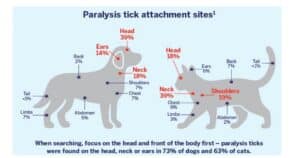
Check your pet’s entire body, paying particular attention to:
Ticks can attach anywhere, so do not stop searching after checking the head and neck. If you find one tick, continue examining your pet in case another is present.
If you find a tick, remove it immediately. Do not delay removal while waiting to see a veterinarian, as the attached tick may continue releasing toxin.
Use a purpose-designed tick-removal tool, tweezers or fingers to grip the tick as close to your pet’s skin as possible and remove it firmly. Avoid squeezing the tick’s body.
If you are unable to remove it promptly, keep your pet calm and take them straight to a veterinary clinic.
Do not be alarmed if small mouthparts remain in the skin. Once the tick’s body has been removed, it can no longer continue injecting toxin. The remaining material may cause some local irritation, which your veterinarian can assess.
Place the tick in a sealed container or take a clear photo so your veterinarian can help identify it.
Contact your veterinarian after finding a tick, even if your dog or cat appears well. Signs of paralysis can develop or worsen after the tick has been removed.
Your veterinarian can advise whether your pet needs to be examined based on:
Do not give food or water to a pet showing possible tick-paralysis symptoms unless your veterinarian instructs you to do so. The toxin can interfere with swallowing and increase the risk of aspiration.
A combination of preventative treatment, daily tick searches and environmental awareness offers the best protection.
Use an effective tick preventative
Use an approved tick-control product for your dog or cat and administer it at the correct intervals.
NexGard SPECTRA for Dogs is a monthly chew that treats and controls paralysis ticks, brown dog ticks and bush ticks, as well as fleas, mites, lice, heartworm and intestinal worms. NexGard SPECTRA Spot-On for Cats is highly effective at controlling new infestations of paralysis ticks in cats and also protects against bush ticks and brown dog ticks.
For the most effective paralysis tick control, the manufacturer advises using NexGard SPECTRA in conjunction with daily tick searches and removing any ticks found. Preventative treatment alone does not entirely remove the risk of tick paralysis. You can read the official NexGard SPECTRA product information for full claim details and directions for use.
Always administer parasite treatments according to the product label and your veterinarian’s advice. Speak to your vet if you are unsure which product or dosing schedule is appropriate for your dog.
Maintain year-round protection
In areas where ticks occur throughout the year, monthly treatment should continue without interruption.
Dogs living outside recognised paralysis tick regions may still need protection if they travel to affected areas. Check that your dog’s treatment is current before travelling and ask your veterinarian how far in advance it should be administered.
Check your dog every day
Daily physical searches remain important even when your dog or cat is on a tick control product. Check your dog after walks, visits to bushland and time spent in long grass, but remember that ticks may also be present in suburban backyards.
Reduce exposure in tick habitats
When walking in a tick-prone area:
Keeping lawns short, removing leaf litter and discouraging wildlife from nesting close to your home may also help reduce tick habitat around your property.
Protect Your Dog With NexGard SPECTRA
NexGard SPECTRA provides a full month of protection against paralysis ticks, brown dog ticks and bush ticks, as well as protection against several other common external and internal parasites.
Use it every month without interruption if you live in, or visit, a tick area, and combine it with daily tick searches to help minimise your dog’s risk
Can a dog or cat die from a paralysis tick?
Yes. Paralysis tick toxin can affect a pet’s breathing and swallowing muscles and may be fatal without urgent veterinary treatment. Some severely affected pets may die despite receiving veterinary care.
Can dogs and cats get paralysis ticks during winter?
Yes. Although there are recognised peak periods, paralysis tick cases can occur throughout the year, including during winter. Pets in tick-prone areas should remain protected according to their veterinarian’s advice and the product label.
What is usually the first sign of a paralysis tick in a dog or cat?
Early signs can include reduced appetite, lethargy, vomiting, gagging, a change in the bark or meow, or weakness/wobbliness in the hind legs. Symptoms vary, so contact your veterinarian promptly if you notice any unusual changes.
How quickly do paralysis tick symptoms appear?
Signs may take several days to develop while the tick is attached. Symptoms can also emerge or worsen after the tick has been removed because toxin already circulating in the body can continue to affect the dog or cat.
Should I take my dog or cat to the vet if I find a tick?
Contact your veterinarian for advice whenever you find a tick, particularly if you live in or have visited a paralysis tick area. Seek emergency veterinary care immediately if your dog or cat displays weakness, vomiting, gagging, an altered bark or meow, difficulty swallowing or breathing problems.
Can a dog or cat on tick protection still get tick paralysis?
Yes. Tick preventatives significantly reduce the risk, but no product completely eliminates it. Regular treatment should be combined with daily tick searches and prompt removal of any ticks found.
What happens if part of the tick remains in my pet’s skin?
Once the tick’s body has been removed, retained mouthparts cannot continue injecting toxin. They may however cause local irritation or inflammation, so ask your veterinarian for advice if the area becomes red, swollen, painful or produces discharge.
Can I use a dog tick treatment on my cat?
No. Some ingredients used in dog parasite treatments can be highly toxic to cats. Only use products specifically registered for cats and follow your veterinarian’s advice. NexGard SPECTRA Spot-On for Cats is highly effective at controlling paralysis ticks, in addition to fleas, mites, heartworm, lungworm, and intestinal worms.
Where are paralysis ticks most commonly found on dogs or cats?
Paralysis ticks are frequently found around the head, face and neck, but they can attach anywhere. Check under the collar, inside the ears, between the toes, under the legs, around the groin and tail, and across the entire body.
Reference
Teo, E. J. M., Arganda, A., Webster, R., Yappa, A., Barker, D. & Barker, S. C. (2023). Two seasons of tick paralysis in Victoria yet one season in Queensland and New South Wales, Australia. International Journal for Parasitology, 53, 43–53.