
Knowing how to calm an anxious dog at the vet or groomer begins with understanding what triggers their stress. For some dogs, seeing the car or arriving in the clinic car park is enough to cause anxiety. Others become worried by unfamiliar animals, people, smells or handling.
Signs of anxiety can include panting, trembling, pacing, vocalising, hiding, refusing to move, trying to escape or reacting when approached.
Fortunately, planning ahead and creating more positive experiences can help make essential vet and grooming appointments less stressful.
If your dog becomes anxious or reactive, let the clinic or groomer know before the appointment. This allows staff to prepare and suggest ways to make the visit easier.
Some vet clinics may offer:
Choose a groomer who is experienced and comfortable working with anxious or reactive dogs. They may suggest an initial meet and greet, a shorter introductory session or an appointment during a quieter part of the day.
Giving staff accurate information also helps them protect your dog’s welfare and everyone’s safety.
If your dog only visits the vet or groomer for examinations, vaccinations, procedures or nail trims, they may quickly associate the location with something unpleasant.
When possible, arrange short visits that do not involve treatment or grooming. Your dog might enter the reception area, receive a treat and leave again. Keep these visits brief, relaxed and within your dog’s comfort level.
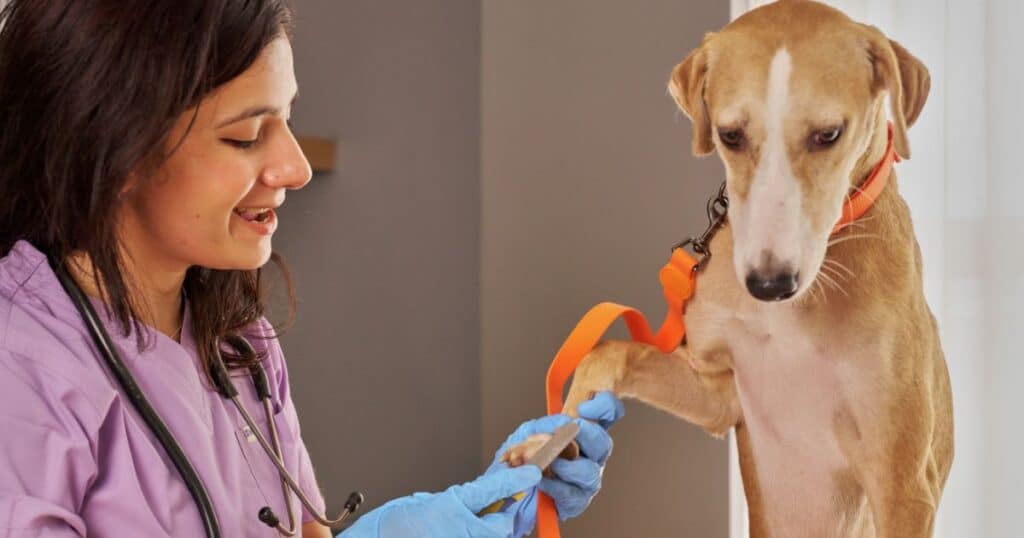
You can also practise some of the experience at home. Gently handling your dog’s paws, ears and body while rewarding calm behaviour may help prepare them for future examinations and grooming.
Never force your dog to tolerate handling when they are frightened. Work gradually and stop if they show signs of increasing stress.
Preparation should begin before the day of the appointment, particularly if your dog is already frightened of the vet.
Helpful steps to calm an anxious dog at the vet or groomer include:
If your dog’s anxiety is severe, speak with your veterinarian before the appointment. They may recommend a behaviour plan, a natural calming supplement, or prescribed medication to help your dog cope.
To help calm an anxious dog at the Vet, take some of your dog’s favourite treats to reward calm behaviour, such as looking at you, standing quietly or approaching a staff member voluntarily.
Some dogs may also benefit from a favourite toy, chew or lick mat while travelling or waiting. However, always check whether your dog needs to fast before a veterinary procedure before offering food, treats or chews.
If your dog is normally food motivated but refuses their favourite treat, they may be too stressed to engage. Ask whether you can move to a quieter location, increase the distance from other animals or pause the interaction.
Car anxiety can add to the stress of a vet or grooming appointment. If your dog only travels by car for these visits, they may begin anticipating an unpleasant experience before you arrive.
Start with short, easy sessions such as sitting in the stationary car, driving around the block or travelling somewhere enjoyable. Gradually increase the duration as your dog becomes more comfortable.
Excessive drooling, vomiting or other signs of nausea may indicate motion sickness rather than anxiety alone. Speak with your veterinarian if your dog regularly becomes unwell in the car. For more tips on this click HERE.
Dogs are highly responsive to our tone of voice, body language and behaviour. Rushing, tightening the lead or repeatedly reassuring your dog in an anxious voice can add to the tension.
Allow enough time to travel and arrive calmly. Use relaxed movements, a normal tone of voice and give your dog space to observe their surroundings.
Your calm behaviour may not remove an established fear response, but it can help prevent extra stress from being added to the experience.
Grooming can involve unfamiliar handling, equipment, noises and physical sensations. Dogs may find clippers, dryers, nail trimming or being restrained particularly difficult.
A gradual introduction can help. Begin with short visits and, where possible, introduce one part of the grooming process at a time. Regular positive handling at home can also make professional grooming less unfamiliar. Learn more about that HERE.
Your groomer should be willing to discuss your dog’s needs and stop if continuing would cause excessive distress or create a safety risk. Some dogs may benefit from shorter, more frequent sessions rather than one long appointment.
Cats can feel particularly vulnerable outside their home environment. Their carrier often only appears immediately before a stressful trip, making it a strong predictor of the vet.
Leave the carrier open in a familiar part of the home and add comfortable bedding, treats or a favourite toy. Once your cat is comfortable entering it voluntarily, gradually introduce closing the door, carrying it around the home and taking short car trips that do not end at the clinic.
During travel, secure the carrier so it cannot slide around. Covering part of it with a lightweight towel may help some cats feel less exposed while still allowing adequate airflow.
Ask your clinic whether you can wait in the car or use a quieter entrance to avoid dogs and other stressors in the waiting room. For more tips on Cats and vet visits, click HERE.
Some dogs and cats need more than gradual exposure and treats to cope with veterinary or grooming visits. Depending on the severity and cause of the anxiety, support may include:
If your pet shows intense fear, panics, attempts to escape or becomes aggressive when handled, seek professional advice. Repeatedly forcing them through frightening experiences can make the anxiety worse.
Zylkene is a non-drowsy calming supplement for dogs and cats. It contains alpha-casozepine, which is derived from casein, a natural milk protein, and is designed to help pets cope with stressful situations such as vet and groomer visits.
It is available from vet clinics and pet specialty stores in chew and capsule forms. For a predictable stressful event, Zylkene is generally started one to two days beforehand, following the product directions or advice from your veterinarian.
To help calm an anxious dog at the vet or groomer, or for pets with ongoing or severe anxiety, they may need a broader plan developed with their veterinarian or a suitably qualified behaviour professional.
Why is my dog scared of the vet?
Dogs may become frightened by previous negative experiences, unfamiliar smells, other animals, the physical handling, or even slippery floors! Pain or illness can also make a normally confident dog more sensitive.
How can I calm an anxious dog at the vet or groomer before the visit?
Prepare with positive practice visits, short car trips and gentle handling exercises. Request a quieter appointment and take high-value treats if your dog is allowed to eat. Dogs with significant anxiety may need a calming supplement like Zylkene, or medication support from their veterinarian.
How do groomers manage anxious dogs?
An experienced groomer may schedule the dog during a quieter time, arrange an introductory visit, use gradual handling or divide grooming across shorter sessions. The right approach will depend on the dog and the severity of their anxiety.
Should I give my dog calming medication before the vet?
Only give prescription medication under veterinary guidance. Your veterinarian can recommend an appropriate option based on your dog’s health, behaviour and level of anxiety. However, a natural supplement like Zylkene can safely be given. However, if your dog is already on prescribed anxiety medication, learn more about what you need to consider first, HERE.
What if my dog is too anxious to take treats?
Refusing a favourite treat may indicate that your dog is too stressed to engage. Increase the distance from the trigger, move to a quieter environment and ask the clinic or groomer whether the interaction can be paused or modified.
About the Author: Lara Shannon is a certified dog behaviourist and trainer, pet food nutrition specialist, Executive Producer and Host of Pooches at Play on Channel 10 and editor of Poochesatplay.com. Lara also runs her own dog training business in Melbourne’s Bayside area and is the Author of World of Dogs and Eat, Play, Love Your Dog

Environmental enrichment for dogs

Get your paws on Lara Shannon’s best selling books ‘Eat, Play, Love (your dog) and World of Dogs.
Available in Australia, USA, UK and Canada.