
The thought of someone stealing your dog is every pet owner’s nightmare, yet dog theft remains a genuine concern in Australia, and many other countries.
Dogs may be taken from outside shops, backyards, cars and even homes. In many cases, an opportunistic thief may need only a few seconds to unclip a regular lead or remove a collar and walk away.
There are practical steps owners can take to reduce the risk, including keeping microchip details current, improving security at home and avoiding leaving dogs unattended in public.
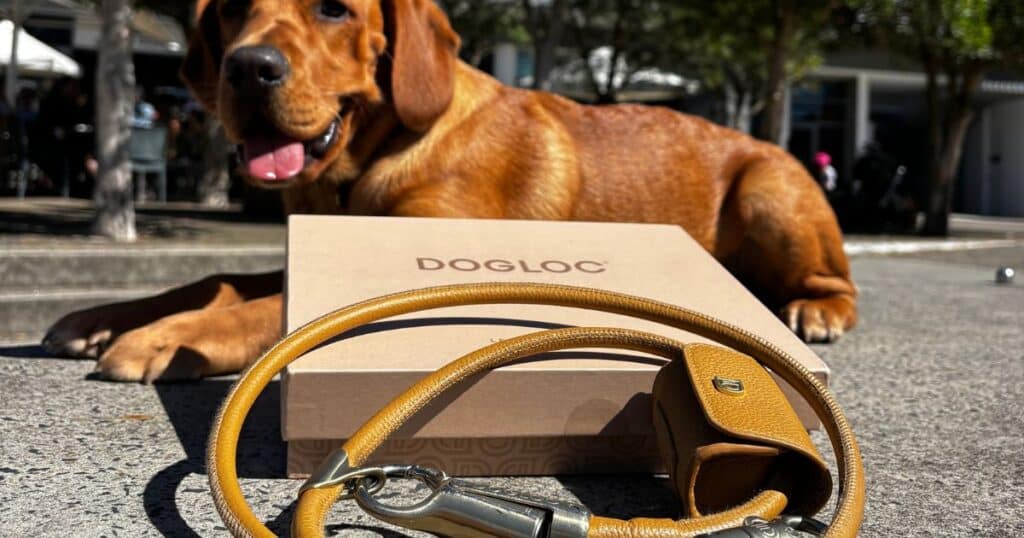
Products such as the Australian-designed Dogloc lockable collar and lead system can also provide an additional layer of protection.
Dogs may be stolen for several reasons, including:
Popular breeds, puppies and dogs that can command high prices may be attractive to thieves, but any dog can be targeted.
Some thefts are planned, while others are opportunistic. A dog left tied outside a shop with a standard collar and lead may be particularly vulnerable because they can often be unclipped and removed within seconds.
Australia does not currently have a central national database that provides a complete picture of reported dog thefts.
Media reports published in 2026 indicate that approximately 340 dogs are stolen in Victoria and New South Wales annually. However, these figures should be treated as estimates rather than a definitive national total.
Some dogs reported as missing may have escaped rather than been stolen, while owners who suspect theft may report the incident to several different organisations. Others may not report it to police at all.
This lack of consistent national reporting makes it difficult to determine whether dog theft is increasing across the country. However, individual cases continue to be reported regularly, and owners should take sensible precautions.
In most Australian states and territories, dogs are still treated as property under general theft legislation. South Australia introduced a specific dog-theft offence in 2022, carrying a maximum penalty of $50,000 or two years’ imprisonment.
No single security measure can guarantee that a dog will not be stolen. Combining several precautions, however, can make your dog a much less accessible target.
Avoid leaving your dog unattended in public
The safest option is not to leave your dog tied outside shops, cafés or other public places, particularly if they will be out of your sight.
Even if you are stepping inside for only a minute, it may be enough time for someone to unclip a lead and leave with your dog.
Leaving a dog unattended can also create other welfare and safety risks. An anxious or reactive dog may become distressed, escape, become entangled or react to unfamiliar people or dogs approaching them.
Keep your dog’s microchip details updated
Microchipping does not prevent theft and is not a live tracking system. It can, however, provide important proof of identification and help a vet, council or shelter contact you if your dog is found.
Make sure your dog is registered with the relevant pet registry and that your phone number, address and email details are current. Because microchip registration systems differ between Australian states and territories, check the requirements that apply where you live.
Your dog should also wear an identification tag with at least one current contact number.
Secure your home and backyard
Dogs can be stolen or escape from unsecured yards, particularly when they are visible from the street.
Check that:
Avoid displaying signs that identify your dog’s breed or suggest that valuable puppies may be present at the property.
Be careful about the information you share online
Social media can unintentionally reveal where you live, the places you regularly visit and when your dog may be left alone.
Review the privacy settings on your accounts and avoid publicly sharing identifying information such as your home address, daily walking routine or the location of puppies.
If you are selling or rehoming a dog, verify potential buyers and avoid allowing strangers unrestricted access to your home or other animals.
Keep recent photographs and ownership records
Keep clear, current photographs of your dog from several angles, including images that show distinctive markings.
It is also helpful to retain:
These records can help establish ownership and create an effective missing-dog alert if your dog disappears.
Consider GPS tracking
A GPS tracker attached to your dog’s collar may help locate them if they escape or are taken while still wearing it.
An Apple AirTag is not the same as a dedicated GPS pet tracker. Its location depends on nearby compatible devices and it may alert a person that an unknown AirTag is travelling with them. It can be a useful backup in some circumstances, but it should not be relied upon as your dog’s only tracking measure.
DOGLOC is lockable dog lead and collar system created by Founders Sarah and Danka, who spent over seven years designing DOGLOC alongside Australia’s top product engineers.
Sarah co-created the product after recognising how easily someone could unclip the regular lead worn by her own dog, Pawpaw.
“When we went to a café and I was briefly distracted or needed to step inside to pay, I realised how easy it would be for someone to simply unclip Pawpaw’s regular lead and walk away,” Sarah explains.
“I wanted to create something that made that much harder, while still feeling practical and stylish for everyday life.”
“When the lead is attached and locked to the DOGLOC collar, the lead cannot simply be unclipped. The collar is also designed so it cannot be unclipped and removed while locked.”
Made with a premium leather, both the collar and lead are steel-reinforced, and one key unlocks both components. The system uses an Australian-patented design and was recognised as a Good Design Award finalist.
By requiring additional time and effort to remove the dog, a lockable system may help deter an opportunistic thief looking for an easy target.
A lockable collar and lead should be seen as an additional security measure rather than a guarantee against theft.
“DOGLOC was designed for brief everyday moments where you want an added layer of security, not for leaving a dog unattended for long periods,” Sarah says.
“It’s about extra protection, not replacing responsible dog ownership.”
This distinction is particularly important for dogs that experience fear, anxiety or reactivity. A dog secured outside a busy shop may become distressed by people, children or other dogs approaching them, regardless of how securely the lead is attached.
Wherever possible, keep your dog with a trusted person and within sight.
Act quickly if your dog disappears and there is any possibility of theft.
Does DOGLOC suit different-sized dogs?
DOGLOC is available in three collar sizes designed to suit most dogs, including a recently introduced large size.
Owners should follow the online size guide and measure their dog carefully. As with any collar, the fit needs to be secure without restricting comfortable movement or breathing.
Each DOGLOC set comes with two keys, allowing owners to carry one and store the spare somewhere safe. An AirTag-compatible keyring is also available for owners who want help keeping track of their keys.
You can view the range and sizing information at DOGLOC.
Is dog theft a specific crime in Australia?
The law differs between states and territories. In many jurisdictions, stealing a dog is dealt with under general theft or property laws. South Australia has introduced a specific dog-theft offence carrying a maximum penalty of $50,000 or two years in prison.
Does microchipping prevent dog theft?
No. A microchip cannot track your dog or prevent someone from taking them. It provides permanent identification and can help reunite you if your dog is scanned by a vet, shelter or council.
Should I leave my dog tied outside a shop?
The safest choice is not to leave your dog unattended in a public place. If you must secure your dog briefly, carefully assess the location, remain as close as possible and consider both the risk of theft and your dog’s emotional and physical safety.
Will a lockable collar completely prevent dog theft?
No product can guarantee that a determined thief will not take a dog. A lockable, steel-reinforced collar and lead may deter opportunistic theft by making it more difficult and time-consuming to remove the dog.
About the Author: Lara Shannon is a certified dog behaviourist and trainer, pet food nutrition specialist, Executive Producer and Host of Pooches at Play on Channel 10 and editor of Poochesatplay.com. Lara also runs her own dog training business in Melbourne’s Bayside area and is the Author of World of Dogs and Eat, Play, Love Your Dog
Environmental enrichment for dogs
Crate training your dog or puppy
Choosing a Dog Bed: How to Find the Right One

How to Choose the Right Dog Coat

The benefit of interactive toys for dogs

Get your paws on Lara Shannon’s best selling books ‘Eat, Play, Love (your dog) and World of Dogs.
Available in Australia, USA, UK and Canada.