

Training tips for rescue dogs aren’t necessarily that different from training a puppy or an older dog. However, because you may not know what your rescue dog has experienced in the past – both good and bad – there can be some additional challenges.
Their previous experiences may influence how they behave, what they find frightening and how they respond to different training methods, people, dogs and environments. The best approach is to start slowly, use positive reinforcement and give your new dog time to feel safe.
Some rescue dogs may react strongly to other dogs, unfamiliar people, certain objects or particular situations. This behaviour may be influenced by fear, anxiety, inadequate early socialisation or previous negative experiences.
Sadly, reactive dogs are often labelled “aggressive” when their behaviour may actually be coming from a place of fear or anxiety.
Start slowly when introducing your rescue dog to new people, dogs and environments. Avoid forcing them into interactions and allow them enough space to observe from a distance where they feel safe.
For more information, read our article about fear-based dog reactivity and aggression.
Even if you have owned a well-trained dog before, training a rescue dog can be a very different experience. It requires patience and understanding while you determine:
Having owned several rescue dogs myself, I know how much love they have to give and how eager they can be to connect with their new family. Dogs can continue learning new skills at any age.
Successful training comes down to understanding your dog’s current level of learning, identifying any anxiety, phobias or triggers, and providing kind and consistent guidance.
It is also important to understand the 3x3x3 rule when it comes to rescue dogs and helping them to settle in to their new home.
Reward Your Dog at the Right Time
Dogs can only connect a behaviour with its consequence when the reward occurs while they are performing that behaviour or immediately afterwards.
This is why telling a dog off after discovering they have toileted inside or been digging in the garden is ineffective and unfair. By then, your dog cannot connect the punishment with the earlier behaviour.
When training a rescue dog, assume you may need to begin with the basics. Mark and reward the behaviour you want as soon as it occurs, rather than punishing unwanted behaviour.
It’s also important to avoid accidentally reinforcing unwanted behaviour. Rewarding a behaviour sometimes and then discouraging it at other times can be confusing for your dog.
Make Training Enjoyable
We all learn more easily when the experience is enjoyable, and dogs are no different.Discover what motivates your rescue dog and use it as a reward during training. This might include:
Every dog is different, and what motivates them may change depending on the situation.
Dogs find it difficult to learn when they are highly anxious or stressed. Keep sessions positive and short, and set your dog up to succeed with reward-based training. You can learn more about the benefits of this approach from the RSPCA Knowledgebase guide to reward-based dog training.
Be Clear, Concise and Consistent
Training your rescue dog helps you understand each other and can strengthen your bond.
Your dog needs to learn what is expected of them and trust that you will remain patient and calm. Set clear and consistent boundaries without using fear, intimidation or punishment.
Remember the three Cs of dog training:
Jumping up is a common example of inconsistent training. We may unintentionally teach a puppy to jump up by giving them affection when they are small, then become frustrated when they continue doing it as an adult.
Read more about how owners can unintentionally reward unwanted behaviour.
Before beginning a new training program, find out whether your dog recognises some common verbal cues or hand signals.
Give the cue once and allow your dog time to respond. If they don’t understand, avoid repeatedly saying the word. Instead, make the task easier and guide them towards the desired behaviour using a reward.
Some useful cues to assess include:
Sit
“Sit” is a useful everyday cue. You can ask your dog to sit before meals, before clipping on their lead, when greeting visitors and before crossing a road.
Stay or Wait
“Stay” or “wait” can help keep your dog safe and teach them to remain calmly in one place for a short period.
Lie Down or Drop
This cue can be helpful at home, at a café or during a veterinary visit. Try both “lie down” and “drop” to see whether your rescue dog already recognises either phrase.
Come
Recall is one of the most important skills you can teach your dog. Begin practising at home, in your backyard or in another securely enclosed area with minimal distractions.
Never test an unknown recall response in an unsecured area. Read our tips for teaching your rescue dog to come when called.
If your dog doesn’t recognise these verbal cues or hand signals, return to basic dog training. You can begin with skills such as sit, recall and “leave it”, which can help prevent your dog from picking up unsafe food or objects.
It isn’t uncommon for an adult dog to become confused about toilet training after moving into a new home.
This can be particularly common when a rescue dog has spent time in a shelter and has become accustomed to toileting in their enclosure. Even a previously toilet-trained dog may need help adjusting to a new environment and routine.
Helpful toilet training tips for rescue dogs include:
For more help, read my blog on toilet training a dog HERE.
Many preparation and training tips for rescue dogs are similar to those for puppies.
Before bringing your dog home, read our advice on preparing for a new puppy or dog and dog-proofing your home.
It is also helpful to learn about:
Give your rescue dog time to settle in and avoid overwhelming them with too many new experiences at once. A predictable routine, a safe resting space and calm, reward-based training can help them build confidence in their new home.
If your dog is displaying fear, aggression, severe anxiety or another concerning behaviour, seek help from a suitably qualified and experienced reward-based dog trainer or veterinary behaviourist as soon as you notice the behaviour. The right professional support can help address the underlying cause and prevent the problem from becoming worse.
About the Author: Lara Shannon is a certified dog behaviourist and trainer, pet food nutrition specialist, Executive Producer and Host of Pooches at Play on Channel 10 and editor of Poochesatplay.com. Lara also runs her own dog training business in Melbourne’s Bayside area and is the Author of World of Dogs and Eat, Play, Love Your Dog
Calm an Anxious Dog at the Vet or Groomer



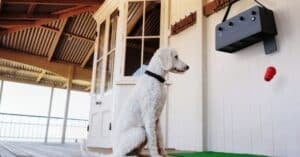
Environmental enrichment for dogs

Get your paws on Lara Shannon’s best selling books ‘Eat, Play, Love (your dog) and World of Dogs.
Available in Australia, USA, UK and Canada.