

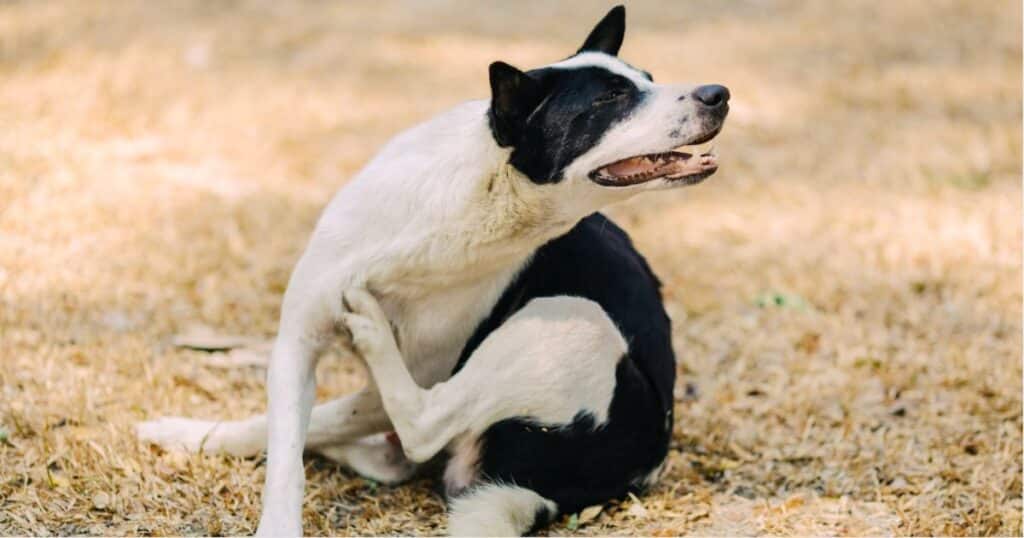
Does your dog constantly scratch, lick or chew their paws? You might assume they have fleas or allergies, but sometimes their emotional wellbeing may also be contributing to the problem.
Psychodermatology in dogs explores the connection between the brain, nervous system, behaviour and skin. Stress and anxiety may influence itching and inflammation, while the discomfort caused by an itchy or painful skin condition can also increase a dog’s stress.
This can create an itch-stress cycle in which itching leads to licking and scratching, skin damage causes further discomfort and the dog becomes increasingly stressed.
I spoke with veterinary psychiatrist Dr Jacqui Ley to learn more about this complex relationship and why both medical and emotional causes may need to be addressed.
Psychodermatology is the study of the relationship between psychological wellbeing and skin health.
A dog’s skin and nervous system do not function independently. Stress can affect how a dog experiences or responds to itching, while ongoing skin discomfort can affect their mood, sleep and behaviour.
Repeated licking, chewing or scratching can then damage the skin barrier and contribute to hair loss, inflammation or secondary infection.
Importantly, psychodermatology in dogs does not mean that a dog’s skin condition is imagined or “all in their head”. Many cases are multifactorial, with a medical skin condition and emotional stress influencing one another.
Possible signs include:
These signs do not prove that anxiety is the cause. Allergies, parasites, infection, pain and other health problems can cause the same behaviours, so veterinary investigation is essential.
Medical causes should always be investigated first when a dog is persistently licking, chewing or scratching.
Your veterinarian may need to check for:
For example, a dog repeatedly licking one paw may have an allergy, infection, grass seed, damaged nail or pain within the leg rather than a primarily behavioural problem.
However, the answer is not always purely medical or purely behavioural. An allergy may start the itching, but licking can become an established response to stress or discomfort. Likewise, an anxious dog may lick more frequently and cause further damage to already sensitive skin.
Your veterinarian may recommend working with a veterinary behaviourist, veterinary psychiatrist or qualified reward-based trainer as part of a whole-dog treatment plan.
An itchy or painful dog may struggle to sleep, settle or cope with everyday frustrations. This discomfort can increase irritability and stress.
Licking or chewing may initially provide momentary relief or become a way for the dog to regulate their emotions. Unfortunately, repeated licking damages the skin and creates more inflammation, discomfort and opportunity for infection.
The cycle may look like this:
Itch or pain → licking and scratching → skin damage → greater discomfort → increased stress → more licking and scratching
Breaking this cycle often requires treatment for both the skin disease and any contributing behavioural or emotional factors.
Treatment should be tailored to the individual dog and may involve several strategies.
Treat the underlying skin condition
Follow your veterinarian’s treatment plan for allergies, parasites, infection, pain or other medical causes.
Even when behaviour is contributing to the problem, the dog’s physical discomfort must be properly treated. Preventing access to an irritated area with protective clothing or a veterinary-recommended collar may sometimes be necessary while the skin heals.
Identify sources of stress
Consider when and where the licking or scratching occurs.
Does it increase when your dog is left alone, visitors arrive, there are loud noises or the household routine changes? Does it happen when they are bored, overtired or unable to move away from another pet?
Keeping a simple diary of the time, location, activity and events surrounding the behaviour can help identify patterns.
Recording a short video may also help your veterinarian or behaviour professional assess what is happening.
Provide appropriate enrichment
Daily opportunities to sniff, explore, chew, play and problem-solve can support a dog’s emotional wellbeing.
Enrichment should suit the individual dog. Some dogs enjoy food puzzles and scent games, while others prefer gentle walks, training, digging or social time with trusted people.
More activity is not always better. An anxious or highly aroused dog also needs help learning how to relax and get adequate rest.
Maintain a predictable routine
Predictability can help anxious dogs feel safer.
Try to keep meals, walks, rest periods and bedtime reasonably consistent while gradually and positively preparing your dog for unavoidable changes.
Provide a quiet resting place where they will not be disturbed by children, visitors or other pets.
Use behaviour modification
A carefully designed behaviour-modification program can change how a dog feels about situations that trigger fear, anxiety or frustration.
Reward-based techniques such as gradual desensitisation and counterconditioning are generally used rather than punishment.
Never reprimand a dog for licking or scratching. Punishment may increase stress without addressing the itch, pain or emotion driving the behaviour.
You can learn more about recognising and managing anxiety in dogs.
Dogs with diagnosed anxiety disorder may benefit from anti-anxiety medication prescribed by a veterinarian.
Medication does not simply sedate a dog or replace training. When appropriately prescribed, it can reduce the intensity of fear, anxiety or compulsive behaviour and help a dog become more receptive to behaviour modification.
A dog experiencing very high levels of stress may find it difficult to process information and learn new responses. Reducing that anxiety can improve their welfare and make training more effective.
Some dogs may use medication for a limited period under veterinary supervision, while others with chronic conditions may benefit from ongoing treatment. Medication should never be started, adjusted or discontinued without guidance from the prescribing veterinarian.
For more information about medication for anxious dogs, click HERE.
A veterinarian may also recommend a calming supplement as part of an individual treatment plan.
These products are not a substitute for diagnosing skin disease, improving the dog’s environment or undertaking behaviour modification. Their suitability and likely benefit will depend on the individual dog, the severity of their anxiety and any other medications or health conditions.
You can learn more about the role of natural calming supplements, and what you need to know, especially if your dog is on veterinary prescribed medication, click HERE.
Arrange a veterinary examination if your dog:
Early investigation can help prevent further skin damage and identify whether medical, behavioural or combined treatment is needed.
The most important takeaway from psychodermatology in dogs is that ongoing licking and scratching should be considered from both a physical and emotional perspective.
Treating allergies, parasites or infections is essential, but some dogs may also need changes to their environment, more appropriate enrichment, behaviour modification or veterinary treatment for anxiety.
By considering the whole dog rather than focusing only on the visible skin damage, you have a better chance of interrupting the itch-stress cycle and improving their overall quality of life.
Can anxiety make a dog itchy?
Anxiety and stress may influence a dog’s response to itching and contribute to licking or scratching. However, medical causes such as allergies, parasites, infections and pain must always be investigated.
Why does my dog constantly lick their paws?
Paw licking may be caused by allergies, infection, pain, injury, a foreign object, stress or a combination of factors. Persistent paw licking should be assessed by a veterinarian.
How can I tell if my dog’s licking is behavioural?
Behavioural licking may occur more often during boredom, frustration, separation or other stressful situations. However, the appearance and timing of the behaviour cannot reliably rule out a medical cause.
What is the itch-stress cycle in dogs?
The itch-stress cycle occurs when itching causes stress and repeated scratching or licking, leading to further skin damage and discomfort. That increased discomfort may then cause even more stress and licking.
Should I stop my dog from licking?
Preventing further skin damage may be necessary, but simply stopping the licking will not address its cause. Speak to your veterinarian about treating the skin and safely protecting the affected area while the cause is investigated.
Can medication help a dog that licks because of anxiety?
Veterinary-prescribed anxiety medication may help some dogs when used as part of a broader plan that includes medical treatment, environmental management and behaviour modification.
About the Author: Lara Shannon is a certified dog behaviourist and trainer, pet food nutrition specialist, Executive Producer and Host of Pooches at Play on Channel 10 and editor of Poochesatplay.com. Lara also runs her own dog training business in Melbourne’s Bayside area and is the Author of World of Dogs and Eat, Play, Love Your Dog.

Benefits of Slow Cooked Dog Food



Get your paws on Lara Shannon’s best selling books ‘Eat, Play, Love (your dog) and World of Dogs.
Available in Australia, USA, UK and Canada.