

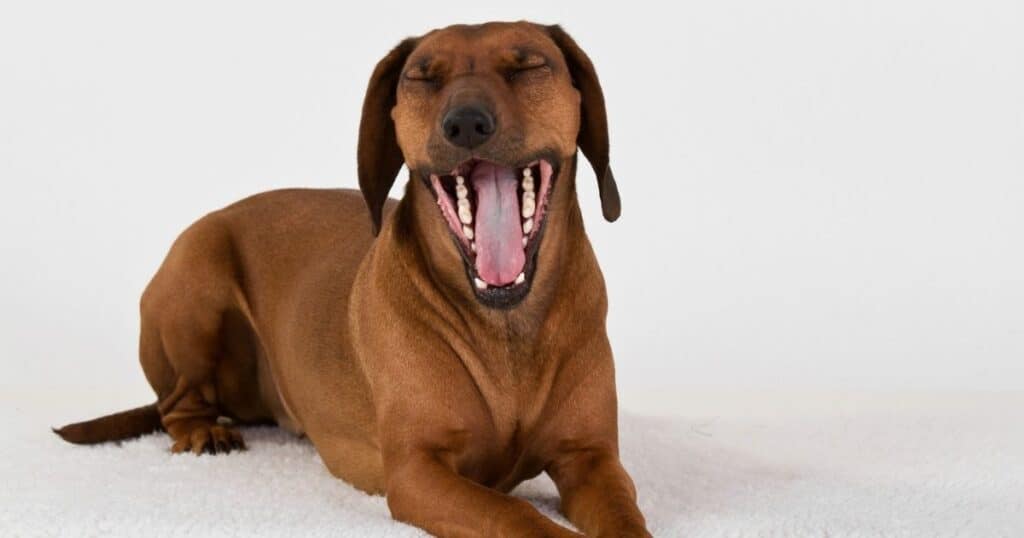
Why do dogs yawn? Like us, dogs often yawn when they are tired, waking up or transitioning between sleep and activity. However, yawning can also be a subtle sign that a dog is feeling stressed, anxious, conflicted or uncertain about a situation.
To understand what your dog’s yawn means, consider when it happens, what is occurring around them and what the rest of their body is communicating. A single yawn does not automatically mean a dog is anxious, but repeated yawning that appears out of context should not be ignored.
The most obvious explanation for a dog yawning is tiredness.
Your dog may yawn:
If your dog has just woken up, looks relaxed and stretches before carrying on with their day, their yawn is unlikely to be a cause for concern.
However, if they yawn repeatedly while facing an unfamiliar person, visiting the vet or being placed in another challenging situation, the yawn may have a different meaning.
Yawning can be a subtle sign of stress or anxiety in dogs, particularly when it occurs in a situation where the dog is unlikely to be tired.
In this context, yawning is often described as a displacement behaviour. Displacement behaviours are normal actions that appear at a seemingly unrelated time when a dog is experiencing uncertainty, frustration or competing motivations.
For example, a dog may want to move away from an unfamiliar person but feel restrained by their lead. Instead of immediately barking, growling or trying to escape, they may turn their head away, lick their lips or yawn.
The yawn does not prove that the dog is anxious. It is a clue that should encourage you to look more closely at the full situation.
A dog may yawn when they are:
Some dogs yawn when a person leans over them, stares at them, kisses their face or holds them tightly. Although humans may intend these actions affectionately, many dogs find close restraint or face-to-face contact uncomfortable.
Rather than interpreting a yawn in isolation, consider these three questions:
If your dog yawns after waking and then approaches you with a loose, relaxed body, they are probably simply tired.
If they yawn when someone reaches towards them and simultaneously turn away, lower their body or pin their ears back, discomfort or anxiety is more likely.
Stress-related yawning may occur alongside:
The more signals you see together, the more likely it is that your dog is struggling with the situation.
If you believe your dog’s yawning is stress-related, do not punish them or force them to remain in the situation. Instead:
Give your dog more distance
Move away from the person, dog, noise or object causing concern. Distance can reduce the intensity of the trigger and help your dog feel safer.
Allow your dog to opt out
Do not force your dog to interact. Avoid restraining them so someone can pat them, and do not follow them if they move to a safe resting place.
A dog choosing to move away is communicating appropriately and should be allowed to do so.
Reduce the pressure
Pause the grooming, handling or training activity and give your dog time to recover. When you try again, break the experience into smaller steps and reward relaxed behaviour.
Create a positive association
At a distance where your dog remains comfortable, pair the trigger with something positive, such as high-value food or a favourite toy.
This is known as counter-conditioning. It should be done gradually and without pushing the dog so close that they become overwhelmed.
Seek professional support
If your dog regularly shows signs of anxiety, cannot recover after a trigger or is becoming increasingly reactive, speak to your veterinarian.
Pain and medical problems can contribute to behavioural changes. Once medical causes have been investigated, a veterinary behaviourist or qualified positive-reinforcement trainer can help you develop an appropriate behaviour modification plan.
A dog may yawn during training because they are tired, but it may also mean they are becoming confused, frustrated or overwhelmed.
Look at how long you have been training and whether the task is too difficult. Other signs that your dog needs a break may include:
Keep training sessions short and set your dog up to succeed. If they appear confused, return to an easier step, reward them and finish the session positively.
Training should be enjoyable and based on clear communication, choice and positive reinforcement.
Occasional yawning is normal. However, a sudden increase in yawning or repeated yawning without an obvious behavioural trigger may warrant veterinary attention.
Excessive yawning can sometimes accompany:
Contact your veterinarian if repeated yawning occurs. Recording a video and noting when the yawning occurs can provide useful information for your veterinarian.
Yawning is only one of the subtle ways dogs communicate discomfort. Recognising these early signs gives you an opportunity to help your dog before their anxiety escalates.
Read more about identifying and treating anxiety in dogs and the broader signs of anxiety in dogs at Pooches at Play.
Why does my dog yawn when they are not tired?
A dog may yawn when they are stressed, anxious, excited, frustrated or uncertain. Consider what is happening around them and look for additional body-language signals before deciding what the yawn means.
Does yawning always mean a dog is anxious?
No. Dogs also yawn when waking, feeling tired or seeing another individual yawn. One yawn should not be treated as proof of anxiety. Repeated, out-of-context yawning accompanied by other stress signals is more significant.
Why does my dog yawn when I pat them?
Your dog may be relaxed, but they could also be uncomfortable with where or how they are being touched. Stop briefly and see whether your dog asks for more contact or moves away. This simple consent check can help you understand their preference.
Why does my dog yawn when I talk to them?
Your dog might be relaxed, responding to your facial movements or feeling uncertain about your tone, posture or proximity. Look at the circumstances and the rest of their body language.
Why does my dog yawn at the vet?
Veterinary clinics contain unfamiliar smells, sounds, people and handling. Yawning at the vet may be a displacement behaviour associated with stress or uncertainty, particularly when accompanied by panting, lip licking, freezing or attempts to escape.
Why does my dog keep yawning in the car?
Repeated yawning in the car may indicate travel anxiety, motion sickness or nausea. Other signs can include drooling, lip licking, restlessness, whining or vomiting. Speak to your veterinarian if your dog regularly struggles with car travel.
Should I comfort my dog when they yawn from anxiety?
You can calmly support your dog and help them move away from the trigger. Giving reassurance does not “reward” the underlying emotion of fear, but avoid restraining, crowding or overwhelming them with attention. Focus on creating safety and reducing pressure.
Why Does My Dog Yawn When I Cuddle Them?
Dogs generally do not like to be cuddled and yawning can signal discomfort if the dog is being held closely or cannot move away. Cuddling your dog is not recommended, and it is vital to give them space if you see any other signs of anxiety.
If you notice any of these signs, stop cuddling and allow your dog to choose whether to return. Affection should be something your dog participates in willingly, rather than something they are expected to tolerate.
It is imperative you do not let your children cuddle dogs. Learn more about children and dogs safety tips HERE.
When should I worry about my dog yawning?
Seek veterinary advice if your dog suddenly begins yawning much more than usual, if it occurs without an identifiable trigger or if it is accompanied by pain, drooling, appetite changes, vomiting, lethargy, breathing difficulties or other unusual symptoms.
About the Author: Lara Shannon is a certified dog behaviourist and trainer, pet food nutrition specialist, Executive Producer and Host of Pooches at Play on Channel 10 and editor of Poochesatplay.com. Lara also runs her own dog training business in Melbourne’s Bayside area and is the Author of World of Dogs and Eat, Play, Love Your Dog

Calm an Anxious Dog at the Vet or Groomer

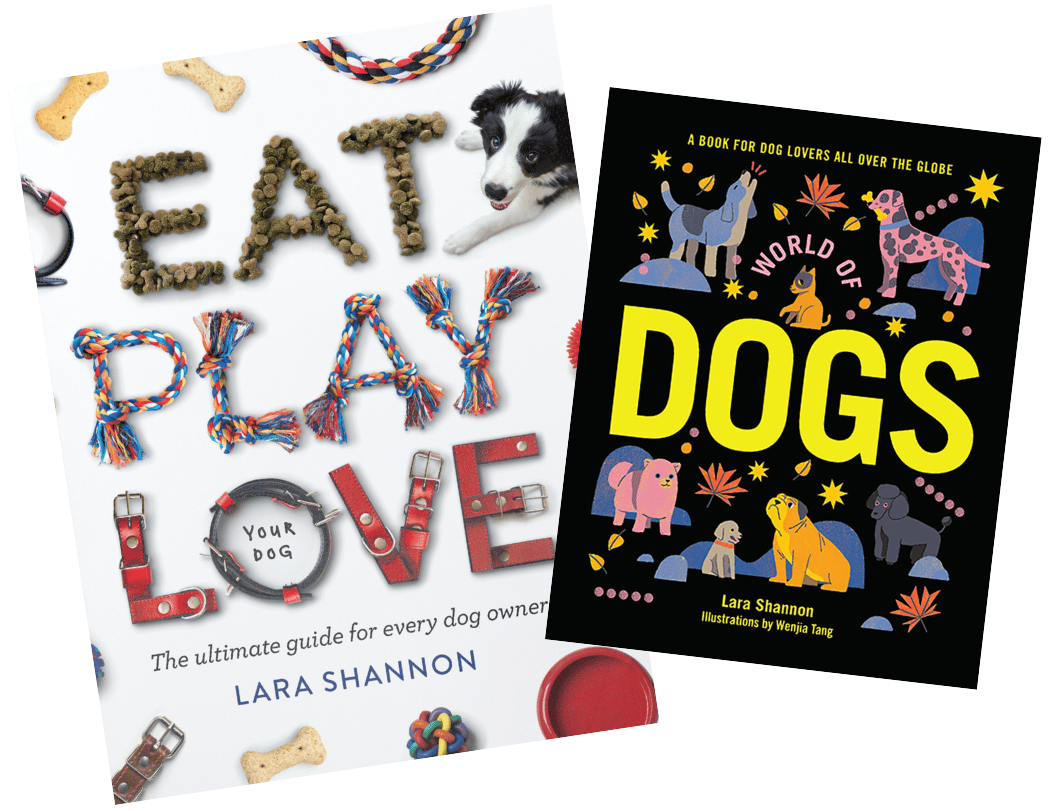
Get your paws on Lara Shannon’s best selling books ‘Eat, Play, Love (your dog) and World of Dogs.
Available in Australia, USA, UK and Canada.