

With so many different types of dog food available, including kibble, fresh, raw, gently cooked and air dried, it can be confusing to know which option is best for your dog.
When comparing air dried dog food vs kibble, one of the biggest differences is how each food is made. Kibble is generally produced using high temperatures and pressure, while air dried food has moisture slowly removed at lower temperatures.
Both can provide complete and balanced nutrition when properly formulated. The best choice will depend on the quality of the individual product, your dog’s nutritional needs, health, preferences and your budget.
Although kibble and air dried dog food can both be stored at room temperature and served straight from the pack, their production methods are quite different.
How is kibble made?
Kibble usually contains a combination of animal-derived ingredients, carbohydrates, fats, vitamins and minerals. The exact proportion and quality of these ingredients can vary significantly between brands and recipes.
The ingredients are typically ground and mixed into a dough before undergoing a process called extrusion. During extrusion, the mixture is exposed to very high heat and pressure, shaped into pieces and then dried to create the familiar biscuits.
This process makes kibble convenient, stable and economical. However, heat-sensitive nutrients can be affected during processing, so vitamins, minerals and other nutrients are usually added during or after production to ensure the final diet meets its nutritional targets.
A good-quality kibble that is complete and balanced can still provide appropriate everyday nutrition for many dogs, however it is worth noting the carbohydrate levels of kibble are significant, and dogs do not require carbohydrates as part of their core dietary nutrients.
How is air dried dog food made?
Air dried dog food starts with ingredients such as meat, organs, fats and selected plant ingredients. Moisture is then slowly removed through a controlled air-drying process.
The temperatures, processing time and methods used vary between manufacturers. Air dried food is still processed for safety and shelf stability, but it generally undergoes less intensive heat processing than extruded kibble.
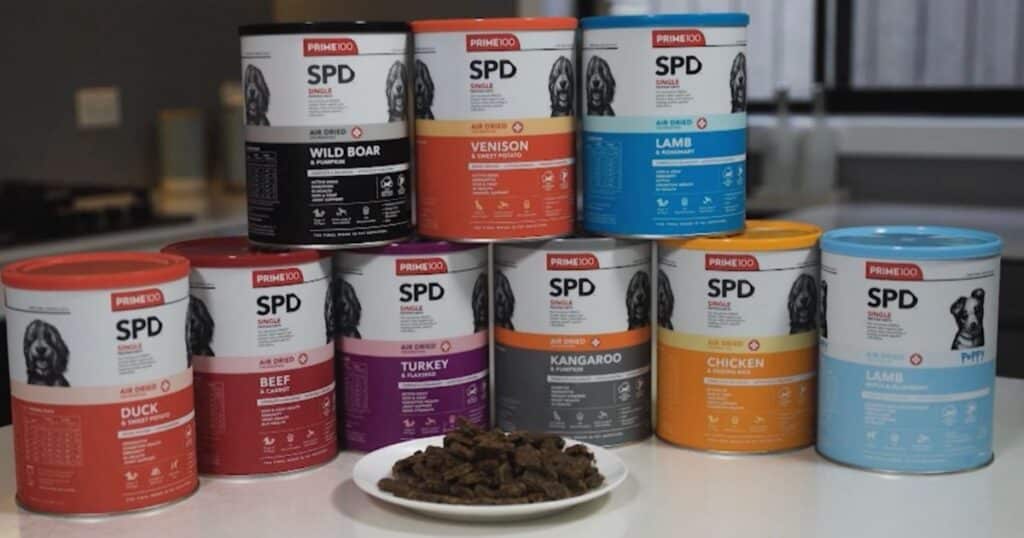
This allows manufacturers, such as Prime100 SPD, to create a shelf-stable food with a texture, aroma and ingredient composition that is more similar to gently processed foods than traditional kibble.
The potential benefits of air dried dog food will depend on the quality and formulation of the individual product. However, there are several reasons pet parents may choose it.
Higher proportions of animal ingredients
Many air dried diets contain a higher proportion of meat and organs than conventional kibble, although this varies between brands.
Prime100 SPD Air Dried recipes, for example, contain approximately 90–92% animal protein ingredients, depending on the recipe. They also include selected functional plant ingredients formulated to provide nutrients such as fatty acids, antioxidants, fibre and prebiotics.
The range is formulated as complete and balanced, with each recipe using one meat protein source. The current recipes and their nutritional suitability can be checked on the Prime100 SPD Air Dried range.
Palatability for fussy eaters
The higher meat content, aroma and softer texture of many air dried foods can make them appealing to some fussy eaters.
However, palatability varies between dogs, and a food that one dog loves may not interest another. It is also important to look beyond taste and make sure the product is appropriate for your dog’s life stage and nutritional requirements.
Convenience and storage
Like kibble, air dried dog food generally:
Always follow the storage directions on the packaging. Reseal the bag or tin properly and keep it in a cool, dry place away from direct sunlight.
Versatility for feeding, training and enrichment
A complete and balanced air dried food can be served as your dog’s main diet when fed according to the manufacturer’s guidelines.
You can also break the pieces into smaller portions and use some of your dog’s daily allowance for:
Using part of your dog’s normal meal for training and enrichment can provide valuable mental stimulation without unnecessarily adding large numbers of extra treats or calories.
When choosing between air dried dog food and kibble, consider:
Air dried food may appeal to owners seeking a meat-rich, less intensively processed option that still offers the convenience of dry food.
Ultimately, the most important considerations are whether the diet meets your dog’s nutritional requirements, agrees with their digestive system and helps them maintain a healthy body condition.
Air dried Dog Food vs Kibble for Dogs With Sensitivities
Some air dried diets may use a single animal protein, which can make the protein sources easier to identify and manage for dogs with sensitivities.
Prime100 SPD Air Dried is formulated using one meat protein source per recipe. This may be useful when your veterinarian has recommended avoiding certain proteins or simplifying their diet.
However, “single protein” does not automatically mean a food is hypoallergenic, or suitable for every dog with food sensitivities. Dogs can react to a variety of ingredients, and an elimination diet for a suspected food allergy should be completed under veterinary guidance.
Can Air dried Dog Food Be Used as a Topper?
Air dried dog food can be used as a topper to add flavour and variety to an existing meal.
If the air dried product is complete and balanced, like the Prime100 SPD Air Dried range, then it is important to calculate and factor this in when feeding it as part of a mixed-feeding plan.
Non-complete and balanced toppers and treats should generally make up no more than around 10% of your dog’s daily calories, unless the overall feeding plan has been properly balanced, to help prevent extra foods from diluting the nutrients supplied by your dog’s main diet, or contributing to unwanted weight gain.
How Much Air dried Dog Food Should You Feed?
Air dried dog food can be more calorie-dense than some types of kibble, so the appropriate serving may look smaller in your dog’s bowl.
Do not compare portions by volume alone. Check the feeding guide and calorie content on the packaging, then adjust the amount according to your dog’s:
Feeding guides are a starting point rather than an exact prescription. Monitor your dog’s body condition and weight, and speak to your veterinarian if you are unsure how much to feed.
Suddenly changing your dog’s diet can cause digestive upset, including diarrhoea, vomiting or excessive wind.
Transition gradually over approximately seven days, or more slowly if your dog has a sensitive stomach:
You may also need to take it even slower and start with 90% to 10% ratio if making significant dietary changes such as introducing or transitioning across from a raw food diet in particular.
These proportions refer to the overall daily feeding allocation, not necessarily equal cup measurements, as the two foods may have very different calorie densities.
Always provide your dog with unrestricted access to clean, fresh water.
Learn more about Prime100 SPD Air Dried
Prime100 SPD Air Dried is formulated as a complete and balanced, single-protein diet that can be served as a main meal or incorporated into your dog’s training and enrichment.
You can find the range at pet specialty stores, Veterinarians or through the Prime100 website.
What is the main difference between air dried dog food and kibble?
The main difference is the manufacturing process. Kibble is generally produced through extrusion using heat and pressure, while air dried food has moisture slowly removed through a controlled drying process. Ingredients and nutritional quality can vary widely within both categories.
Is air dried dog food healthier than kibble?
Air dried food may contain more animal ingredients and undergo less intensive heat processing, but that does not automatically make every air dried product healthier than every kibble. The food should be complete and balanced, suitable for your dog and fed in an appropriate quantity.
Is air dried dog food considered raw?
Air dried food is generally made using raw ingredients, but it should not automatically be treated as identical to a raw diet. Manufacturers, like Prime100 SPD, use controlled drying processes to reduce moisture and improve shelf stability. The precise production and food-safety methods vary between brands.
Does air dried dog food need to be refrigerated?
Most commercially produced air dried dog foods do not require refrigeration before or after opening, provided they are stored according to the manufacturer’s directions. Keep the packaging sealed in a cool, dry place to preserve freshness.
Is air dried dog food suitable for fussy eaters?
Air dried food can be highly palatable because of its meat content, aroma and texture, making it appealing to many fussy eaters. Individual preferences vary, however, so no food is guaranteed to suit every dog.
Can I use air dried dog food as training treats?
Yes. If the food is complete and balanced, like Prime100 SPD, you can take pieces from your dog’s measured daily allowance and use them as training rewards. This is a useful way to reward your dog without adding excessive treat calories.
Can puppies eat air dried dog food?
Puppies can eat an air dried diet if the specific product is labelled as complete and balanced for growth or for all life stages. Puppies have different nutritional requirements from adult dogs, so always check the label rather than assuming every air dried food is suitable.
About the Author: Lara Shannon is a certified dog behaviourist and trainer, pet food nutrition specialist, Executive Producer and Host of Pooches at Play on Channel 10 and editor of Poochesatplay.com. Lara also runs her own dog training business in Melbourne’s Bayside area and is the Author of World of Dogs and Eat, Play, Love Your Dog

Benefits of Slow Cooked Dog Food


Psychodermatology in Dogs: The Itch-Stress Connection


Get your paws on Lara Shannon’s best selling books ‘Eat, Play, Love (your dog) and World of Dogs.
Available in Australia, USA, UK and Canada.