
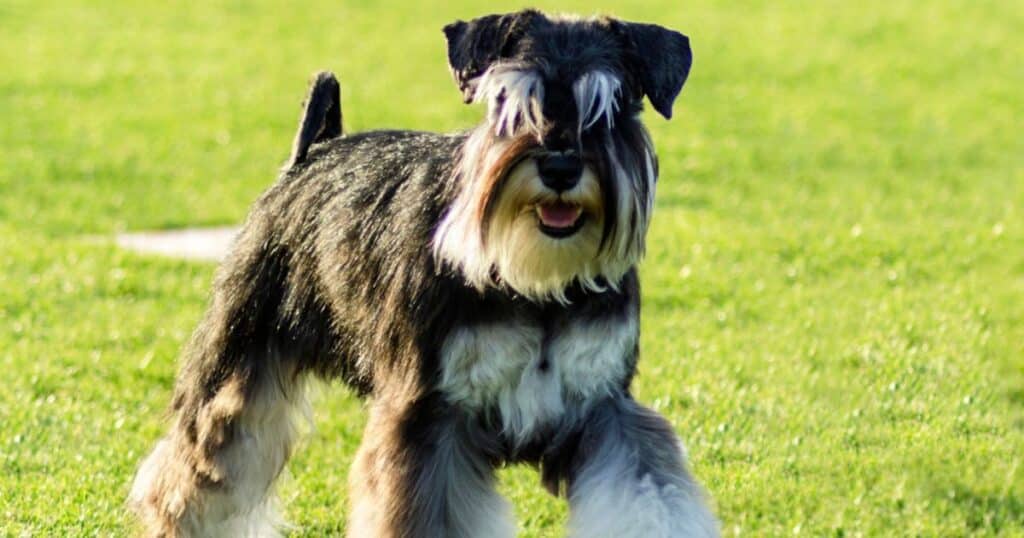
Small but full of personality, the Miniature Schnauzer is an intelligent, energetic and affectionate dog known for its distinctive beard, expressive eyebrows and lively terrier spirit.
They can adapt well to apartments or houses, provided they receive enough daily exercise, mental stimulation and companionship.
The Miniature Schnauzer was developed in Germany during the late 1800s as a farm dog and ratter. The breed was created by crossing smaller Standard Schnauzers with breeds believed to include the Affenpinscher and Poodle.
The result was a small but sturdy working dog that was alert, intelligent and well suited to hunting vermin.
Miniature Schnauzers are best known for their wiry double coat, beard and prominent eyebrows. Recognised coat colours include salt and pepper, black and silver, and solid black.
Their average lifespan is approximately 12 to 15 years, although some live longer.
Miniature Schnauzers are loyal, affectionate and very people-focused. Often described as “little shadows”, they generally enjoy being close to their humans and involved in family life.
Their alert nature can make them excellent watchdogs, but it can also mean they are quite vocal. Early socialisation and consistent, reward-based training can help manage excessive barking and encourage calm behaviour.
Like many terrier-type dogs, Miniature Schnauzers can also have an independent or stubborn streak. Keeping training sessions short, positive and engaging will help maintain their interest.
Most healthy adult Miniature Schnauzers need approximately 45 to 60 minutes of exercise each day, adjusted for their age, health and fitness.
Because they were bred to hunt vermin, they may retain a strong prey drive and enjoy activities that allow them to sniff, search and problem-solve. Scent games, interactive toys, food puzzles and tricks training are great ways to keep their minds active.
Their compact size and adaptable nature mean they can live happily in an apartment or a house, as long as their physical and mental needs are met.
Like all breeds, Miniature Schnauzers can be predisposed to certain health conditions.
Dr Amelia Bunker from Knose Pet Insurance says pancreatitis and high blood-fat levels, known as hyperlipidaemia, are among the health concerns seen in the breed. Dietary and weight management can therefore be particularly important.
Miniature Schnauzers can also be prone to gaining excess weight, which may place additional strain on their joints and contribute to other health problems.
Other conditions to be aware of include skin allergies or sensitivities and eye conditions such as cataracts and progressive retinal atrophy.
Feed your dog a complete and balanced diet, maintain a healthy body weight and schedule regular veterinary check-ups. Always speak to your vet promptly if you notice changes in your dog’s appetite, behaviour, skin, eyes or general health.
The Miniature Schnauzer’s wiry double coat is low-shedding, but it requires regular care to prevent tangles and matting.
Brush the coat regularly using a slicker brush followed by a grooming comb, paying particular attention to the beard, leg furnishings and the areas behind the ears. Most Miniature Schnauzers also require professional grooming every six to eight weeks, which may include clipping or traditional hand-stripping.
Food, moisture and debris can collect in their trademark beard. Regularly combing and gently wiping it after meals can help prevent matting, odour and bacterial build-up. Wash it when needed using a gentle dog shampoo, then rinse and dry it thoroughly.
The DGG slicker brush, grooming comb and bamboo wipes can help maintain your Miniature Schnauzer’s coat and beard between professional grooming appointments.
To browse the DGG grooming range and download its free dog-grooming guide, visit doggonegorgeous.com.au.
A Miniature Schnauzer may be a great match if you want a small, intelligent and affectionate dog that enjoys exercise, training and being part of family life.
However, prospective owners need to be prepared for regular grooming, daily enrichment, consistent training and the possibility of barking or prey-driven behaviour.
Do Miniature Schnauzers shed?
Miniature Schnauzers are considered low-shedding, but their double coat still needs regular brushing and professional grooming.
Do Miniature Schnauzers bark a lot?
They can be vocal due to their naturally alert temperament. Early training, adequate enrichment and rewarding calm behaviour can help manage excessive barking.
How much exercise does a Miniature Schnauzer need?
Most healthy adults benefit from approximately 45 to 60 minutes of daily exercise, along with mentally stimulating activities such as scent games and tricks training.
Are Miniature Schnauzers good family dogs?
Miniature Schnauzers can make affectionate and loyal family companions when their exercise, training and grooming needs are met. As with every dog, interactions with young children should always be actively supervised.
As with every dog, interactions with young children should always be actively supervised. For more tips and advice on safe interactions between children and dogs, click HERE.
About the Author: Lara Shannon is a certified dog behaviourist and trainer, pet food nutrition specialist, Executive Producer and Host of Pooches at Play on Channel 10 and editor of Poochesatplay.com. Lara also runs her own dog training business in Melbourne’s Bayside area and is the Author of World of Dogs and Eat, Play, Love Your Dog
Calm an Anxious Dog at the Vet or Groomer
Benefits of Slow Cooked Dog Food

Get your paws on Lara Shannon’s best selling books ‘Eat, Play, Love (your dog) and World of Dogs.
Available in Australia, USA, UK and Canada.